
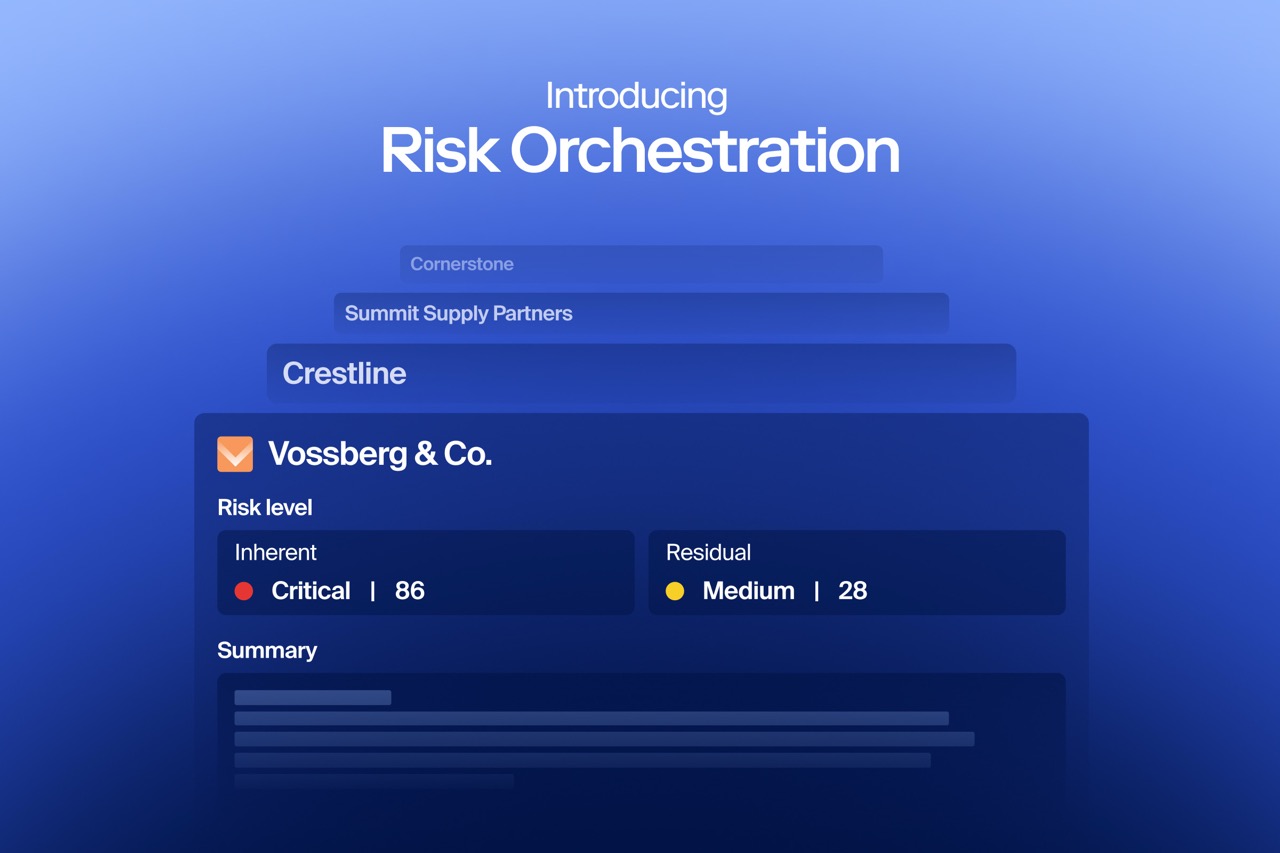
How AI Risk Orchestration puts TPRM in the purchase flow
Intake, scoring, findings, and monitoring for every supplier in one workflow.

Most third-party risk management (TPRM) software is a system of record. It collects and stores supplier documents, and analysts do everything else by hand: they research each supplier, chase reviewers in legal and security, and track findings across spreadsheets and email. That approach holds up with a few hundred suppliers. It falls apart as the supplier count grows and AI suppliers bring new questions about how they handle your data and whether they train models on it.
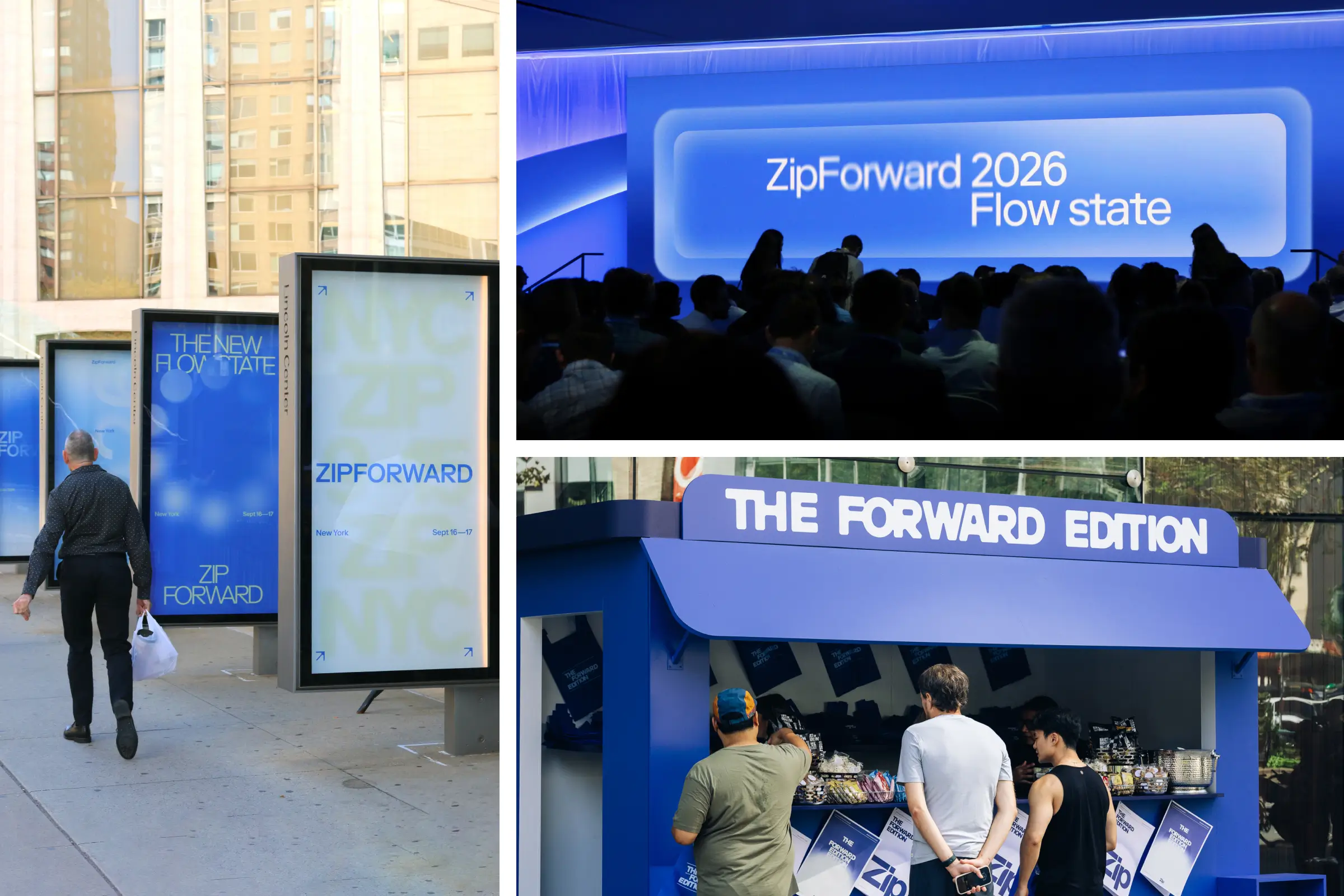
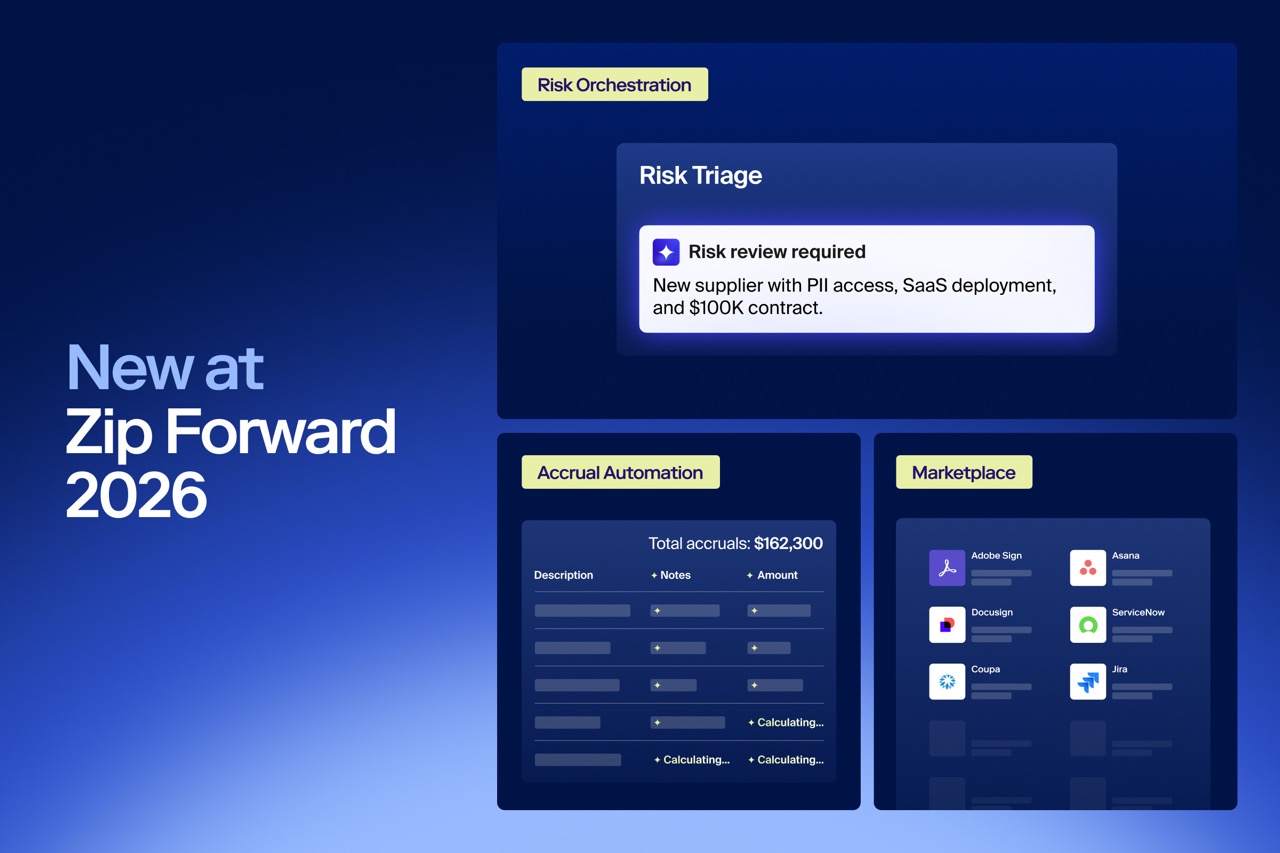
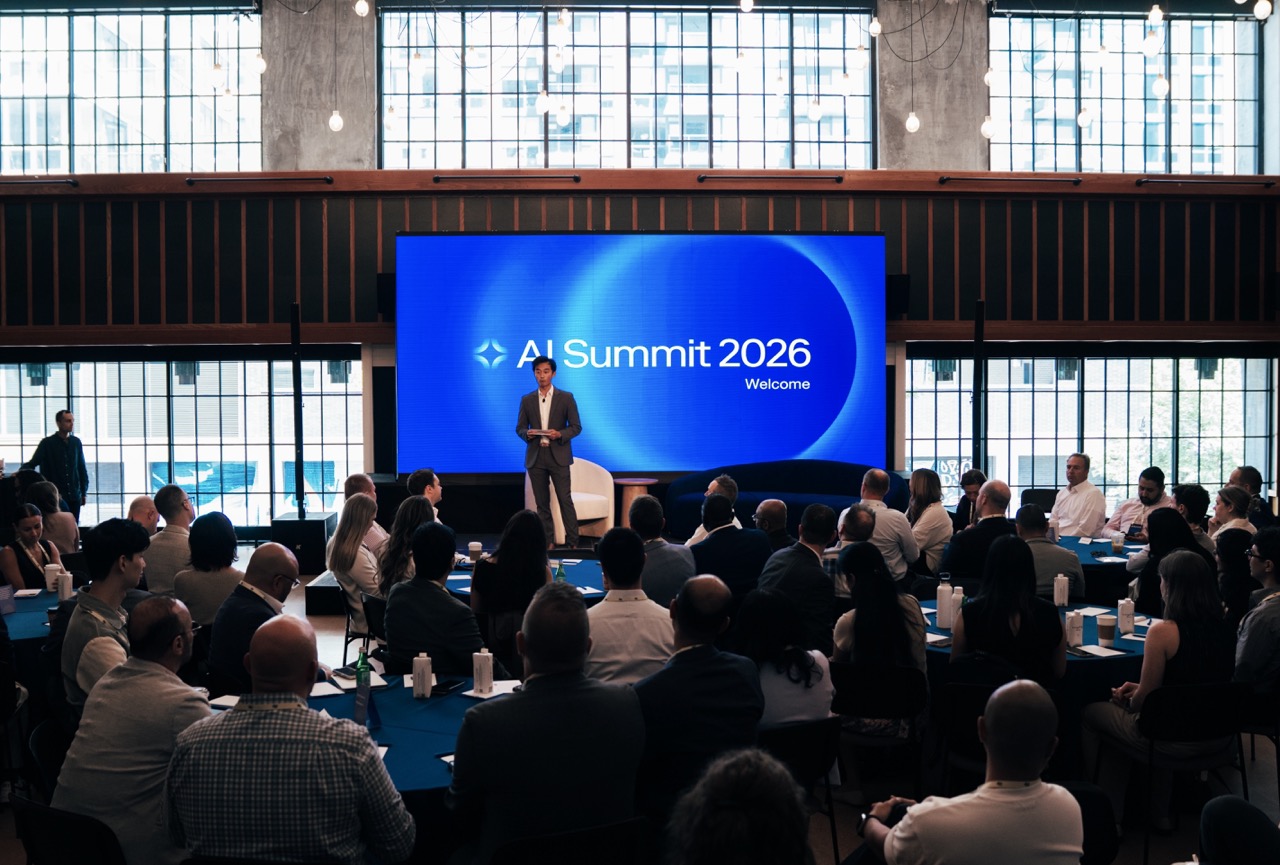
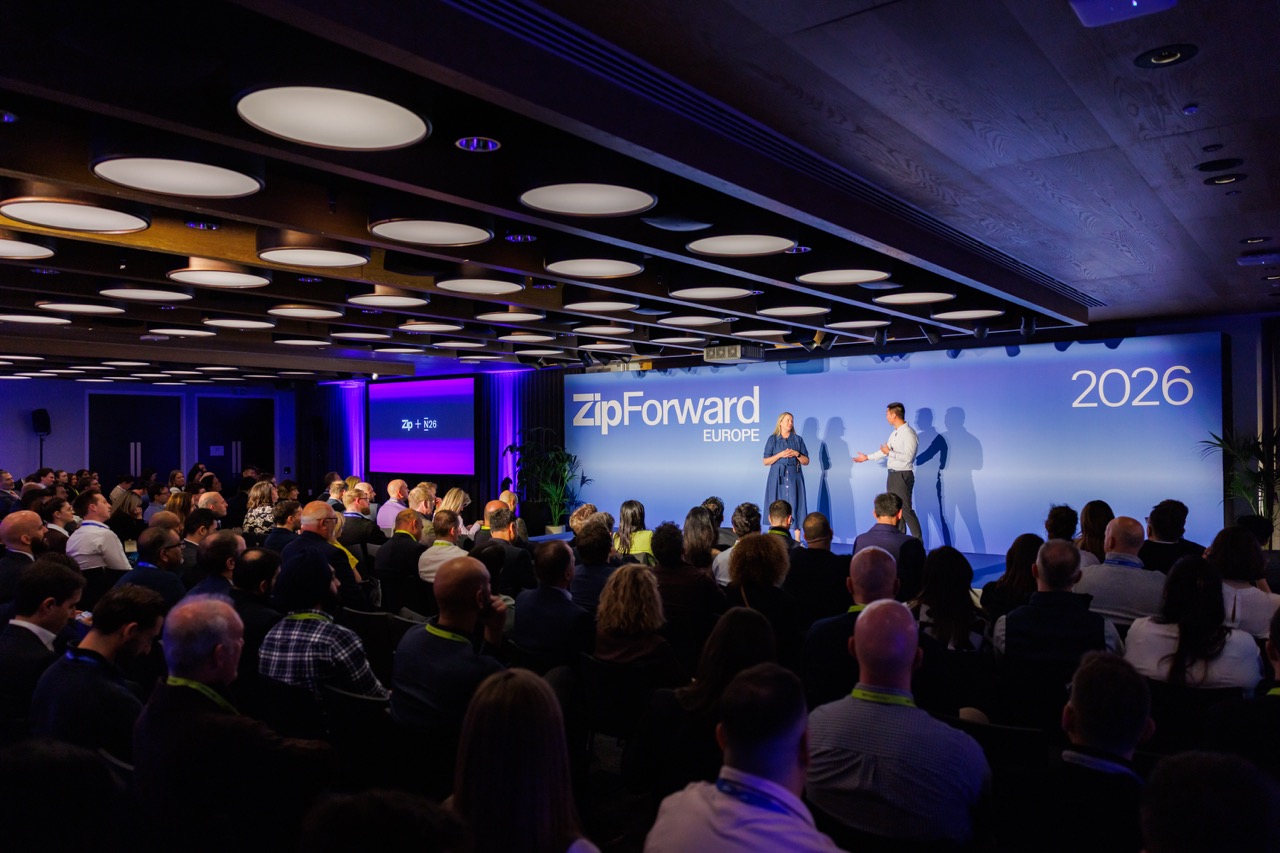
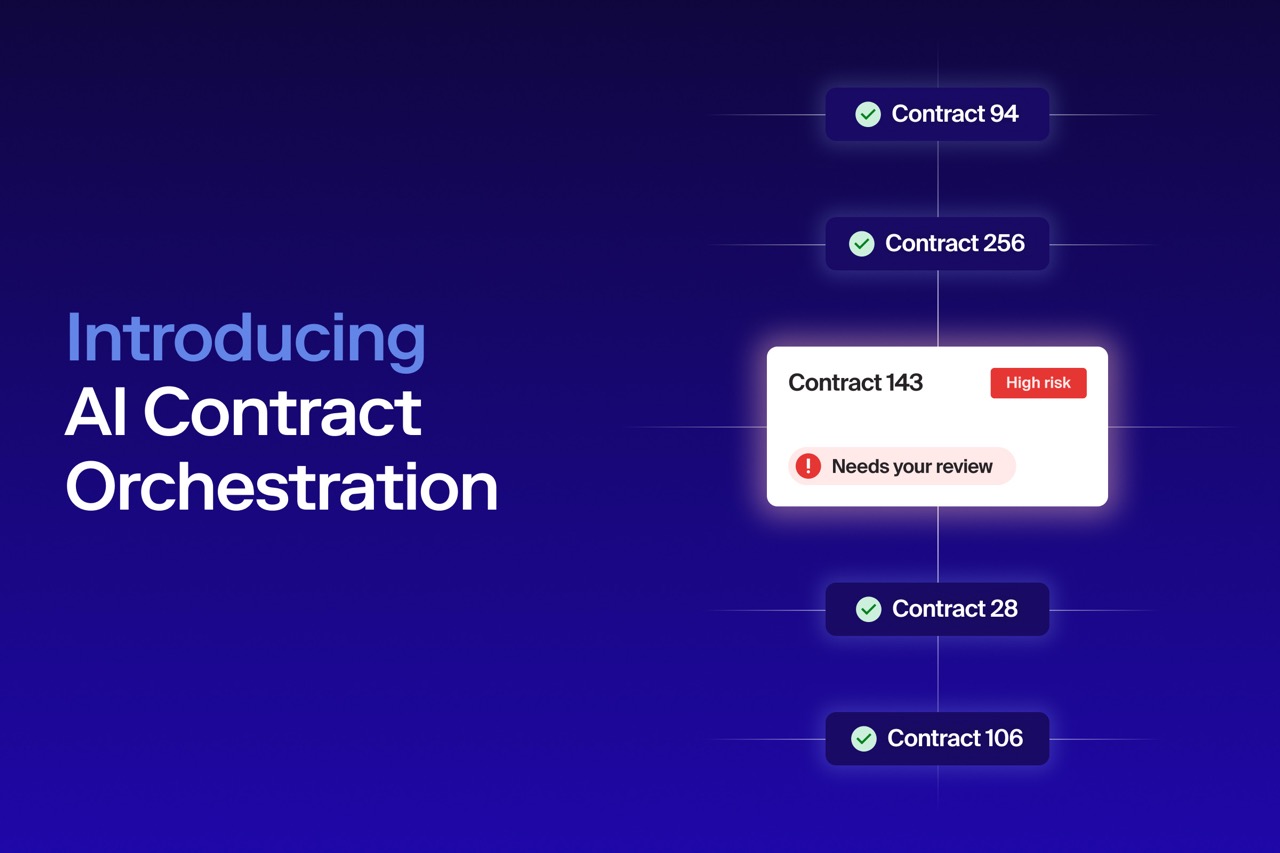
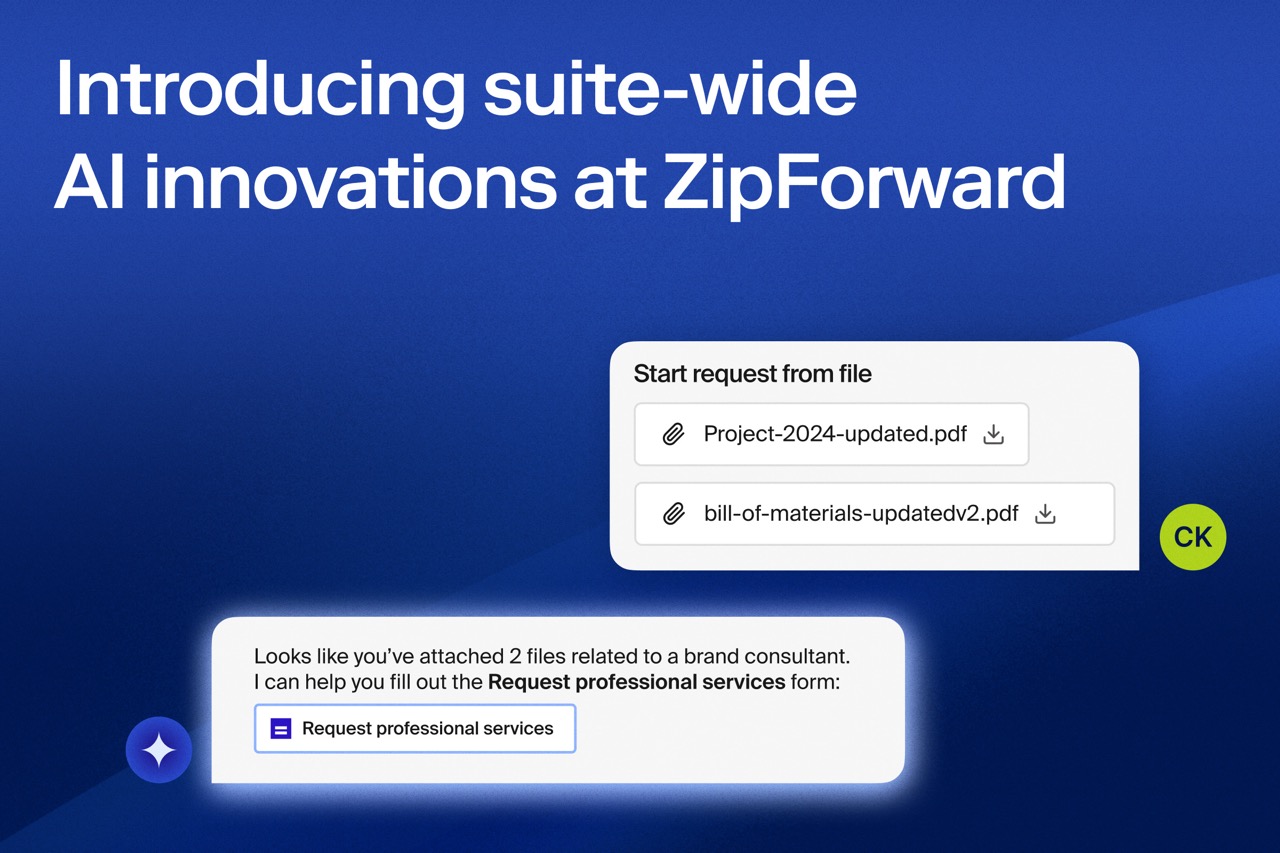
At Zip Forward this year, we announced AI Risk Orchestration, which runs that work inside Zip, where purchasing decisions are already made. Here is how it works and how it fits your stack.
What is AI Risk Orchestration?
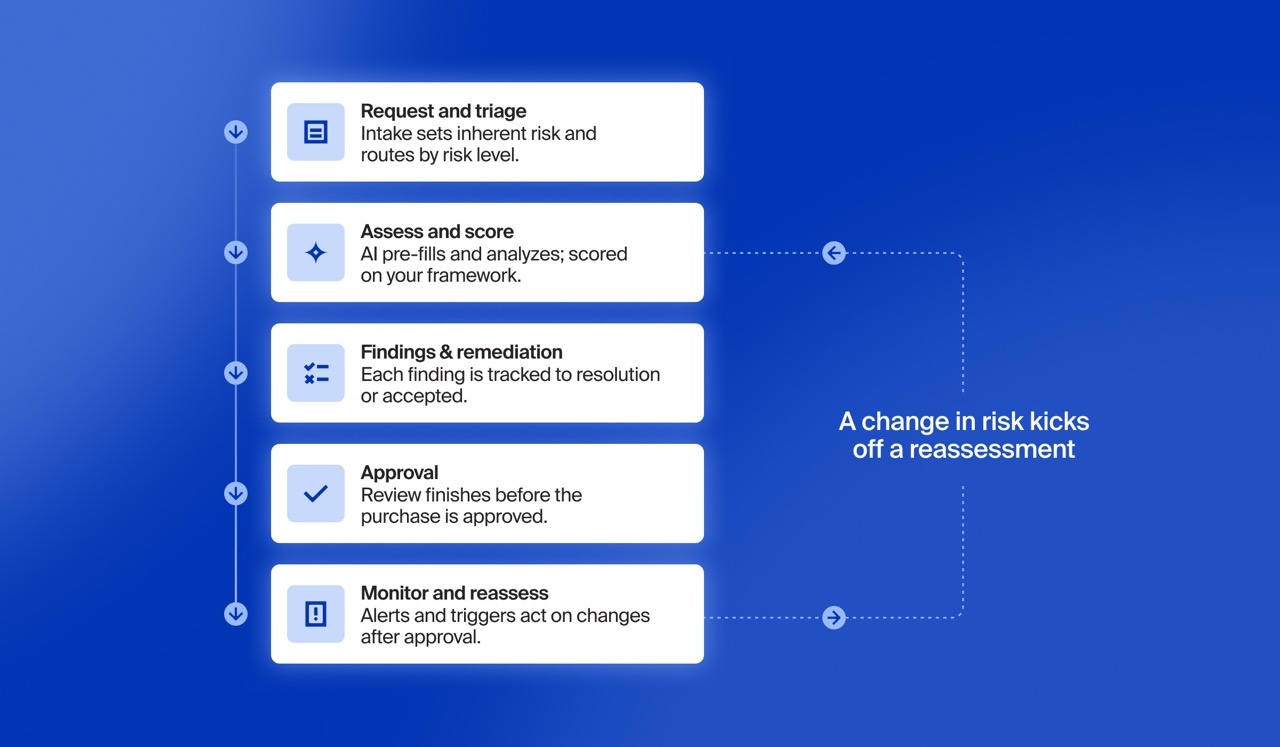
AI Risk Orchestration is Zip's TPRM product. It covers the full supplier lifecycle in one system, from the first purchase request through ongoing monitoring:
- Intake and triage screens every request and decides whether the supplier needs an assessment and how deep it goes.
- Assessment and scoring pulls from the intake form, supplier documents, and external signals to score risk against your own framework.
- Findings and remediation identifies each issue, assigns it, and tracks it to resolution before the purchase is approved.
- Approvals and routing brings in procurement, legal, security, and finance at the step where each one is needed.
- Monitoring and reassessment alerts your team when a supplier's risk profile changes.
- The audit trail logs every decision and action.
Monitoring connects back to the start. When a supplier's risk profile changes, Zip sends it back through reassessment, so a supplier approved two years ago doesn't keep its original score by default.
Risk starts at the request
Zip builds the risk profile during purchase request intake. Intake questions adapt to what the requester says, so an office supplies vendor and an AI platform handling customer data trigger different follow-ups.
From those answers, Zip sets inherent risk, decides whether an assessment is needed, and routes the request to reviewers. High-risk suppliers get a deeper review with legal, security, and IT, and those teams review in parallel instead of waiting on each other. Low-risk suppliers take a fast path, and some clear without manual review.
Risk review runs in the same workflow as purchase approvals, so an open finding can block a contract signature or hold a PO. Enforcement doesn't depend on a requester remembering to loop in the risk team.
Scoring that follows your framework
Zip scores suppliers against your methodology. You set custom weights and sub-scores, and you can score a specific engagement instead of the supplier as a whole, since the same vendor can be low risk for one team's use case and high risk for another's. Scores account for inherent risk and for the effectiveness of your controls.
Zip has a full TPRM data model underneath. If your methodology lives in a spreadsheet or policy document today, AI playbook ingestion rebuilds it in Zip, so you don't start from scratch.
How findings get generated and resolved
Every assessment produces findings, and every finding ends in a logged outcome. Zip generates findings from four inputs:
- Questionnaires, which Zip pre-fills from supplier information already in the platform, so analysts and suppliers type less.
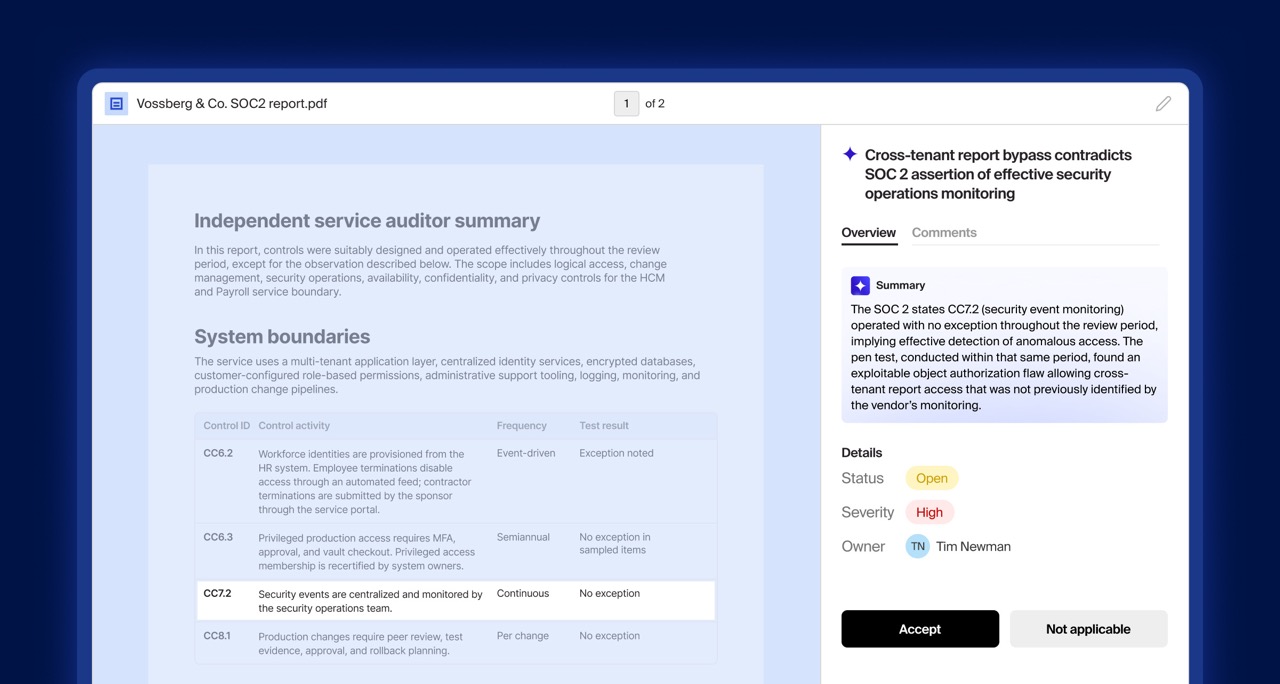
- Documents, which Zip reads (SOC 2 reports, policies, insurance certificates) and checks against your policy, flagging exceptions.
- External signals from sanctions lists, breach databases, financial health data, and more.
- Evidence the supplier submits, which Zip validates before suggesting remediation steps for each finding.
Zip handles that review work so risk experts spend their time deciding what to do about each finding. Each finding is assigned and tracked until the team accepts the risk or asks the supplier for more evidence. Nothing is approved while findings are open, and every action goes into the audit trail.
Monitoring after approval
After the initial assessment, teams set monitoring triggers for each supplier, such as a cybersecurity breach or a new sanctions listing. When a trigger fires, Zip alerts the supplier's risk owner and can send the supplier back through reassessment. A breach at a supplier surfaces when it's reported. Under an annual review cycle, the same breach could go unnoticed for months.
What each team sees
AI Risk Orchestration runs in Zip and connects to GRC, ERP, and CLM systems. When someone submits a purchase request, Zip starts the required risk reviews, and every team sees the status of the workflow without leaving Zip.
- Security reviews exceptions instead of every request, with SOC 2 analysis and monitoring alerts tied to the approval workflow.
- Procurement keeps onboarding moving and sees review status in real time instead of chasing risk teams across tools.
- Legal gets an auditable record from request to contract, so it can show that risk was assessed and acted on before signature.
What changes for risk teams
A large insurance company streamlined 90% of its risk activities with AI Risk Orchestration.
Because approvals, findings, and decisions are logged as they happen, audit prep starts from a complete record. The scoring framework that runs at intake is the same one monitoring uses, so a supplier is judged on the same criteria in year one and year three.
To see AI Risk Orchestration in action, request a Zip demo, read the Zip Forward announcement, or reach out to your Zip team.
%20Large.jpeg)
%20Large.jpeg)
%20Large.jpeg)

%20Large.jpeg)


.jpg)






.webp)

%20(1).webp)


.avif)
%20(1).avif)


.avif)


.webp)


AI procurement orchestration, from intake to pay
Enter your business email to keep reading
