
Govern third-party spend from onboarding to renewal










Why financial services firms choose Zip
Zip keeps financial institutions audit-ready with faster buying, stronger controls, and lower costs.
Operational efficiency & agility
Scale operations across business lines
Give bankers, underwriters, and advisors self-serve buying and automated invoicing.
Modernize through M&A and migrations
Keep vendor and contract data in sync through mergers and core conversions.
Scale AI within risk appetite
Vet AI vendors for model risk and keep every automated decision audit-ready.
Regulatory & operational resilience
Meet supervisory expectations
Onboard fintech partners fast, with sanctions and screening built in.
Control outsourced operations
Govern vendors touching customer data and close findings before they become MRAs.
Protect critical business services
Map and monitor critical third and fourth parties before regulators ask.
Cost discipline & leverage
Reduce the structural expense base
Rationalize vendors across business lines and legal entities, and source tail spend.
Tighten expense discipline
Catch market data and software renewals early, and enforce payment terms.
Accelerate speed-to-value
Route consulting and legal spend to negotiated rate cards so savings land sooner.
Built for how financial institutions buy
Banking & lending
Core processors, payments vendors, and data providers all face third-party risk reviews examiners will scrutinize. Zip runs them in parallel with an audit-ready trail.
Insurance
TPAs, claims vendors, and policy administration platforms all touch policyholder data and need privacy and security reviews. Zip onboards them quickly and re-reviews them on a set schedule
Asset & wealth management
Market data, research, and trading tools run on seat-based contracts that often auto-renew. Zip flags upcoming renewals early, so you renegotiate before contracts lock in.
Fintech
KYC, fraud, and cloud vendors bill by transaction volume, and sponsor banks expect proof of oversight. Zip tracks usage-based spend and keeps diligence ready for bank audits.

Using Zip to set up our central buying desk and renewal desk, we were able to take potentially risky vendors out of the system and show actual savings in the tens of millions of dollars.”
Edina Cavalli,
VP of Procurement, CIBC


People who’ve been in your seat
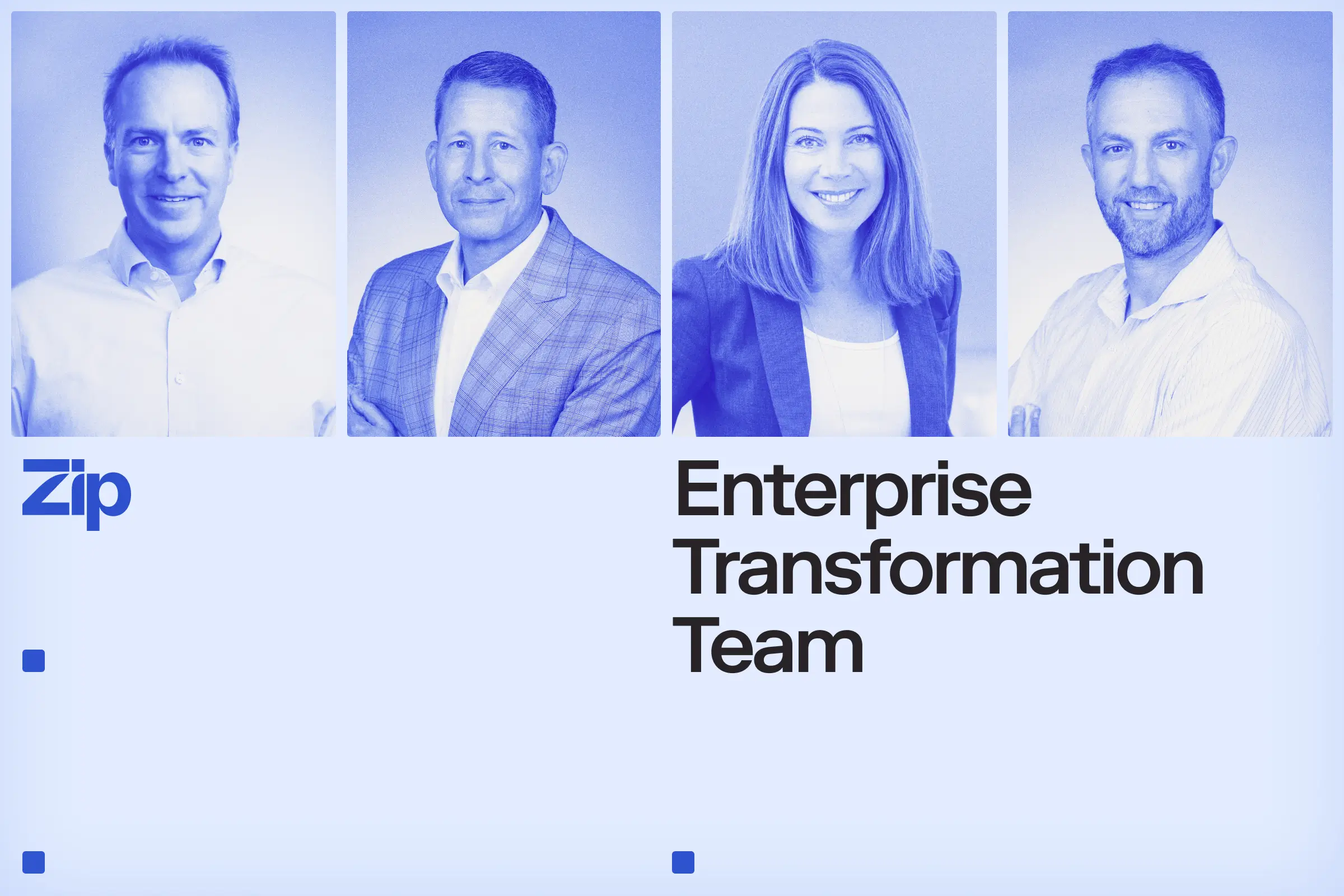
Zip's Enterprise Transformation Office is staffed by former procurement leaders who joined Zip to fix the function they used to run.

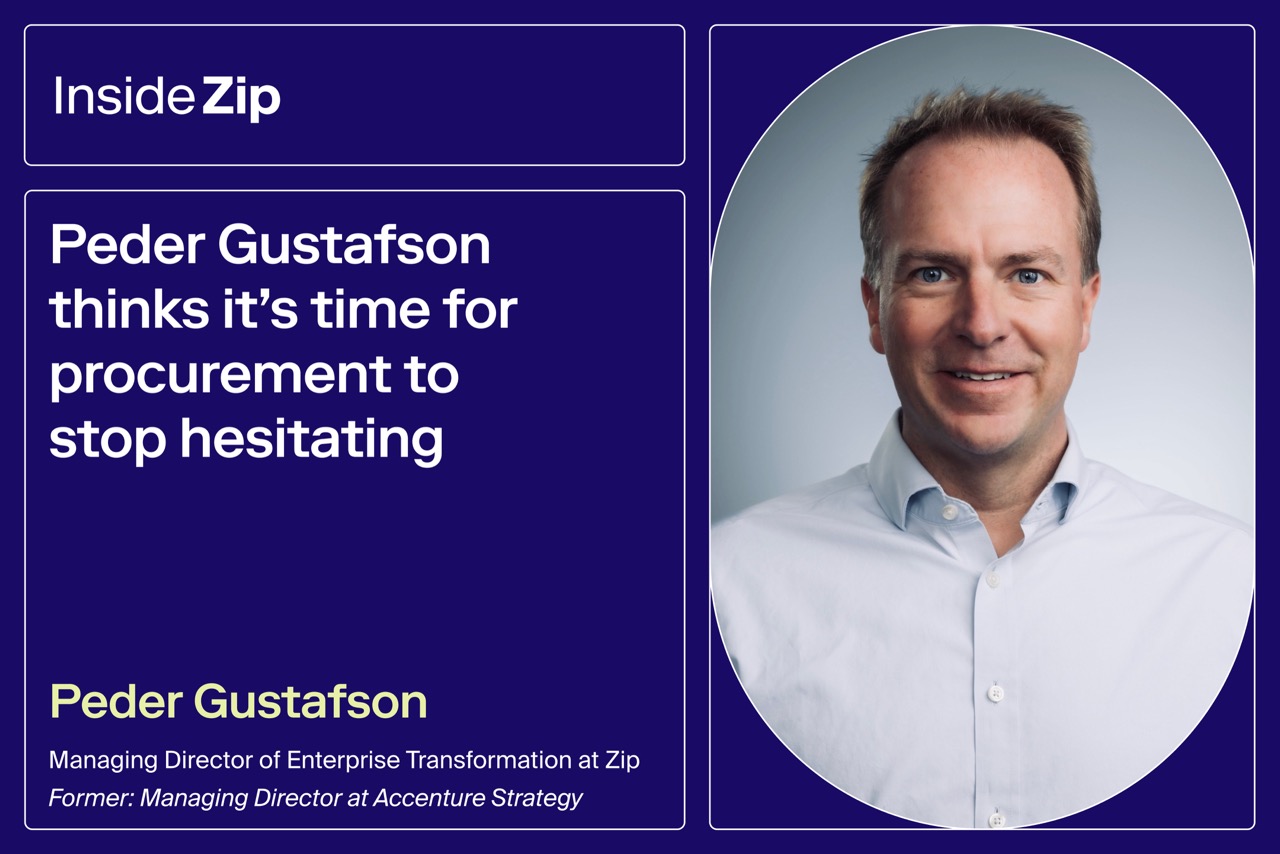
Peder Gustafson
Managing Director, Enterprise Transformation
Peder previously served as CPO for UnitedHealth Group and Ameriprise Financial / Columbia Threadneedle, head of global indirect for Medtronic, and Managing Director at Accenture Strategy. He now leads Zip's Financial Services practice, helping financial institutions modernize purchasing, manage third-party risk, and stay compliant.

Helen Boyd
Director, Enterprise Transformation for Financial Services, SaaS and Pharma
Helen previously served as Global Head of Procurement Services at Stripe, where she deployed Zip’s Intake to Procure and PO modules. She is based in EMEA and is part of the Enterprise Transformation team advising on procurement and finance transformation.
Connect Zip to your finance, risk, and compliance stack
ERP and financial systems




Source-to-pay & contingent workforce




GRC, screening & legal


Get third-party risk on rails
Related articles

Frequently asked questions
FAQs
What is procurement software for financial services?
Procurement software for financial services is a governed intake-to-pay platform that routes every third-party purchase through the compliance, risk, and finance checks that regulated institutions require. Zip gives banks, insurers, and asset managers one workflow to onboard vendors, control spend, and stay audit-ready, with every request tracked from intake through renewal.
How does Zip help financial institutions stay compliant with third-party risk regulations?
Zip routes every vendor request through your existing GRC and legal tools automatically, so no purchase skips required third-party-risk, KYC/AML, or interagency review. It follows the 2023 Interagency Guidance on Third-Party Relationships from the OCC, Federal Reserve, and FDIC, capturing approvals, owners, and documentation for each request across the full vendor lifecycle. That keeps teams ready for regulatory and internal audits.
Does Zip replace our ERP or source-to-pay systems like Coupa and SAP Ariba?
No. Zip sits on top of your existing systems as the intake and orchestration layer rather than replacing them. It syncs bi-directionally with ERPs like SAP, Oracle Fusion, Workday Financials, NetSuite, and Microsoft Dynamics 365, and it layers over source-to-pay suites like Coupa and SAP Ariba. Every request stays in Zip while each reviewer keeps working in the system they already know.
What is the difference between procurement orchestration, intake, and procure-to-pay?
Procure-to-pay (P2P) handles the transactional steps from requisition to payment, intake captures the initial request, and orchestration connects the two across the full lifecycle by coordinating people, approvals, and systems. Zip is a procurement orchestration platform. It acts as the front door for every request and routes it through compliance, risk, and finance so users never have to navigate multiple systems.
How long does vendor onboarding take with Zip?
Routine, low-risk vendor onboarding can finish in days with Zip, compared with the two to four weeks that manual, email-driven processes typically take. Zip collects tax, banking, and risk documentation upfront at intake and sends only true exceptions to Legal and Compliance. Routine deals clear quickly, and specialists spend their time on the vendors that actually need review.
Which types of financial services firms use Zip?
Zip supports banking and lending, insurance, asset and wealth management, and fintech firms, each of which answers to different regulators and carries a different vendor-risk profile. Institutions including Discover, Prudential, and Invesco use Zip to onboard vendors faster and stay continuously audit-ready. Zip adapts the procurement workflow to all four models.” This adds Fintech as the fourth subvertical and changes “all three models” to “all four models.
How does Zip reduce procurement costs and renewal waste?
Zip surfaces concentration exposure, renewal timing, and market benchmarks at intake, so it catches overlap, over-licensing, and silent auto-renewals before they hit. For financial institutions, that turns recurring, seat-based contracts across core banking, market-data, and compliance tools such as FIS, Bloomberg, and Actimize into controlled spend. You renegotiate before an auto-renewal locks you in.
How does Zip use AI in procurement for financial services?
Zip uses AI to read and triage vendor documents such as MSAs, DPAs, and risk questionnaires, then routes only true exceptions to the right reviewer so low-risk purchases move without burying Legal or Compliance. It also tracks recurring spend across your banking, market-data, and compliance stack to flag usage drift and pre-renewal price creep automatically.