

At a glance
“
We really see Zip both as a company and as a real strategic enabler and accelerator for our AI and tech-driven transformation in the end-to-end third-party management lifecycle.
”
Before Zip
- Purchase requests came through many doors, and requesters found missing approval steps halfway through
- A mistake on an intake form sent requesters back to the start
- Simple, low-risk transactions averaged almost 40 days, with only about 10% of deals on POs or lighter documentation
After Zip
- One front door for every request, with visibility into every approval and where a request is stuck
- AI agents check intake forms in real time, so errors get fixed on the spot
- A central buying desk handles about 750 of 4,000–4,500 yearly transactions in roughly 13 days instead of almost 40
Key Products:
Integrations:
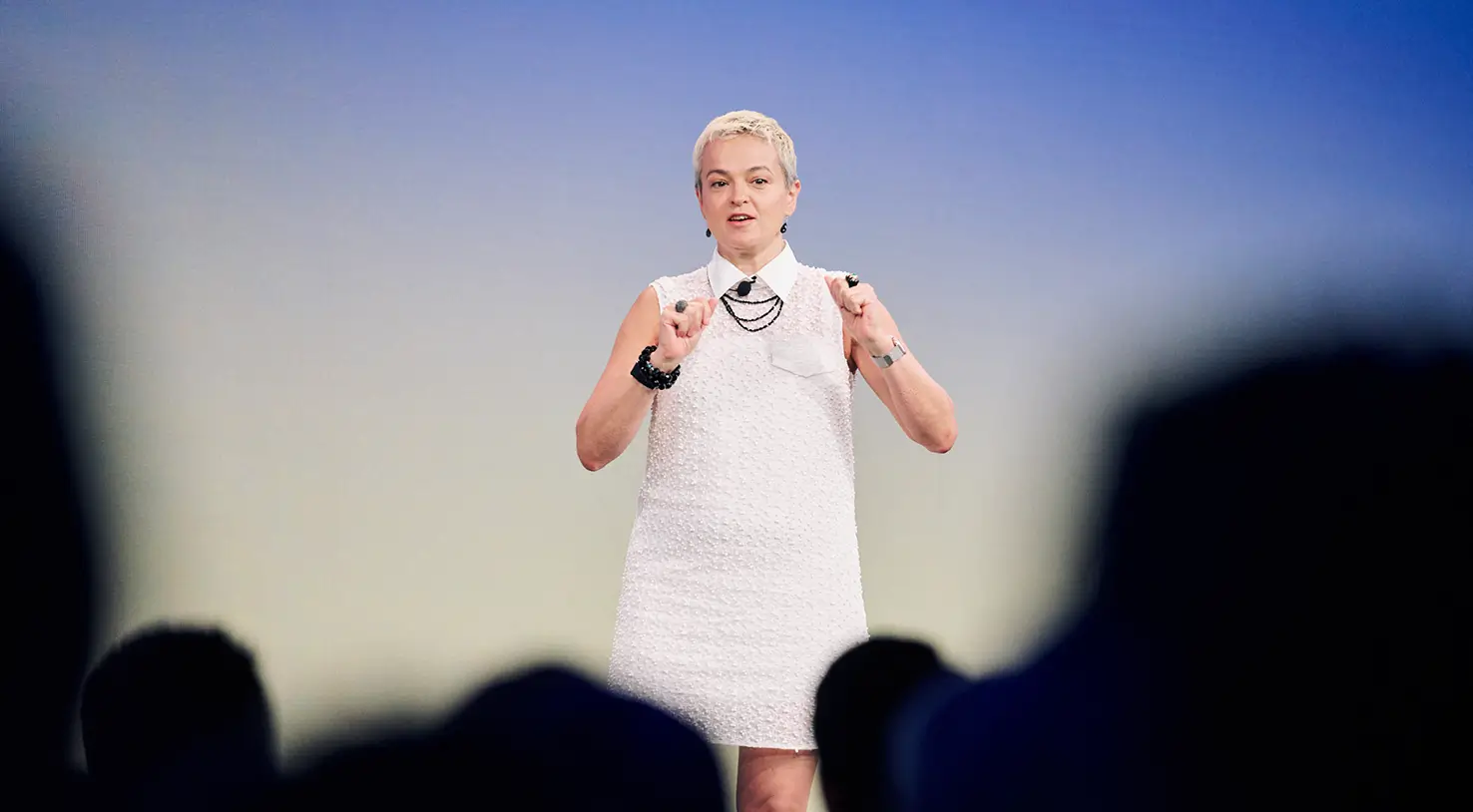
Edina Cavalli, VP Procurement at CIBC, presented the bank’s procurement transformation at Zip Forward 2026, where she described the bank's TPM 360 program: a seamless, automated third-party management experience built on right-sized technology and an integrated data ecosystem that did not exist before.
The challenge
Procurement isn't where banks naturally excel, Edina Cavalli shared with the Zip Forward audience. As she put it, "financial institutions don't do procurement very well because our life doesn't depend on procurement." But CIBC has long been one of very few financial institutions running with positive operating leverage, and that margin was shrinking. Procurement was handed a mandate to find significant savings across the portfolio.
The obstacles were built into how the bank bought. Requests arrived through many channels, and requesters often learned halfway through that they had missed approval steps. In Edina's words, it was like a board game where "you are sent back to the beginning, put into jail, or whatever the board game suggests." CIBC contracted for almost everything, with only about 10% of deals on POs or lighter documentation, so even simple, low-risk transactions took almost 40 days. Business teams drove many decisions toward single sources, limiting what procurement could return to the bank, and duplicate vendors, duplicate contracts and missing data made every step harder.
Adding AI raised its own questions. AI adoption in procurement at financial services firms sits around 3%, against a cross-industry average of about 10%. Edina pointed to uncertain ROI and to colleagues asking, "What will happen to my job?"
CIBC's answer was TPM 360, a program to create a seamless, automated third-party management experience on right-sized technology and an integrated data ecosystem that did not exist before.
The solution
CIBC became the first Canadian financial institution to implement Zip. Zip Intake and Orchestration gave the bank what Edina calls the CIBC "Amazon experience": every single purchasing request comes through one front door and gets the same experience, whatever is being bought.
Intake that fixes mistakes as they happen. Customized, auto-populating intake forms are checked by AI agents, so requesters get "real-time and very quick feedback and course correction along the way" instead of being sent back to the beginning.
A central buying desk for simple buys. Zip routes transactions to the right fulfillment path. Over six months, about 750 of CIBC's 4,000-4,500 yearly transactions have moved through the desk, cutting average turnaround from almost 40 days to about 13.
Visibility that changes behavior. Business partners can see how long their own approvals take, and risk partners can see where a transaction is stuck and who is missing an SLA. "If there is visibility, there is changed behavior and a sense of urgency."
AI agents on clean, trustworthy data. CIBC uses many of Zip’s AI Agents, and Edina highlighted a few of her favorites:
- Duplicate Supplier Check looks for existing vendors with the same name or company hierarchy, so teams skip steps they don't need.
- Intake Validation catches form mistakes before they cost days of edits and re-reviews.
- Renewal Assist helps decide whether to continue, terminate or consolidate a vendor relationship.
Compliance by design, then a full spend review. CIBC reopened its entire $6.5B annual spend, reviewing deals category by category, contract by contract and vendor by vendor to consolidate vendors and build enterprise leverage. In Edina's words, "all the gains that we made with Zip and the better experience have really given us the credibility to push through that enormous work."
An AI approach built around people. CIBC pairs Zip with its own AI model, Kai, which it first used to digitize contracts and answer regulator questions in days instead of months. Edina's governance principles:
- Treat AI as a business opportunity with a clear outcome, not as a technology.
- Decide up front whether AI should automate, augment or escalate, and where AI stops and the human starts.
- Invest in change management, better processes and fewer handshakes.
- Design for traceability, since audit matters and Zip supports it.
- Keep the human in the loop: "AI doesn't necessarily give you the best vendor; it gives you the best-documented vendor."
CIBC also chose to use Zip's AI instead of its own engineers where it could, so those engineers build differentiating banking products. Edina said she is excited about Zip's upcoming Risk Orchestration AI, which would put vendor risk and commercial performance data in front of procurement during sourcing and negotiation.
The result
With Zip as the front door for third-party management, CIBC has moved from a slow, opaque process to one that is faster and better governed. Edina says Zip is helping make "compliance by design" a reality, and the results show up in speed, savings and decision quality. On speed, she says, "we cut cycle times by about 75% for those very low-risk and very simple transactions." Beyond speed, she points to four results:
Savings CIBC can show. With Zip in place, the procurement team can "show actual savings in the tens of millions of dollars."
A change in culture. Zip's workflows and intelligent triaging help CIBC "drive behavior, change the culture of our organization," and act on simple market events it used to skip because they were time-consuming and people didn't understand the process.
Time back for higher-value work. Edina wants the capacity AI frees up to go toward more strategic work, so sourcing and operations professionals can "do more strategic activities, do deeper analysis" and advise the business earlier.
Better decisions, not just faster ones. AI, Edina says, "really improves our decision quality and insights," and with Zip surfacing risk signals through the vendor lifecycle, "reducing risk is just as much a commercial value as getting X% off rates."
Edina measures AI the way she measures procurement: efficiency, effectiveness and experience, tied back to cycle time, cost savings and cost avoidance, and to the operating model.


