
Risk Orchestration
Run supplier risk assessments 90% faster with AI










Expedite onboarding with AI-powered workflows and streamlined cross-functional reviews.
Drive supplier adoption with an AI-powered portal built for collaboration.
Automate risk checks at scale while maintaining audit-ready records.
Purpose-built AI at every step
Reduce 90% of manual work with risk agents.
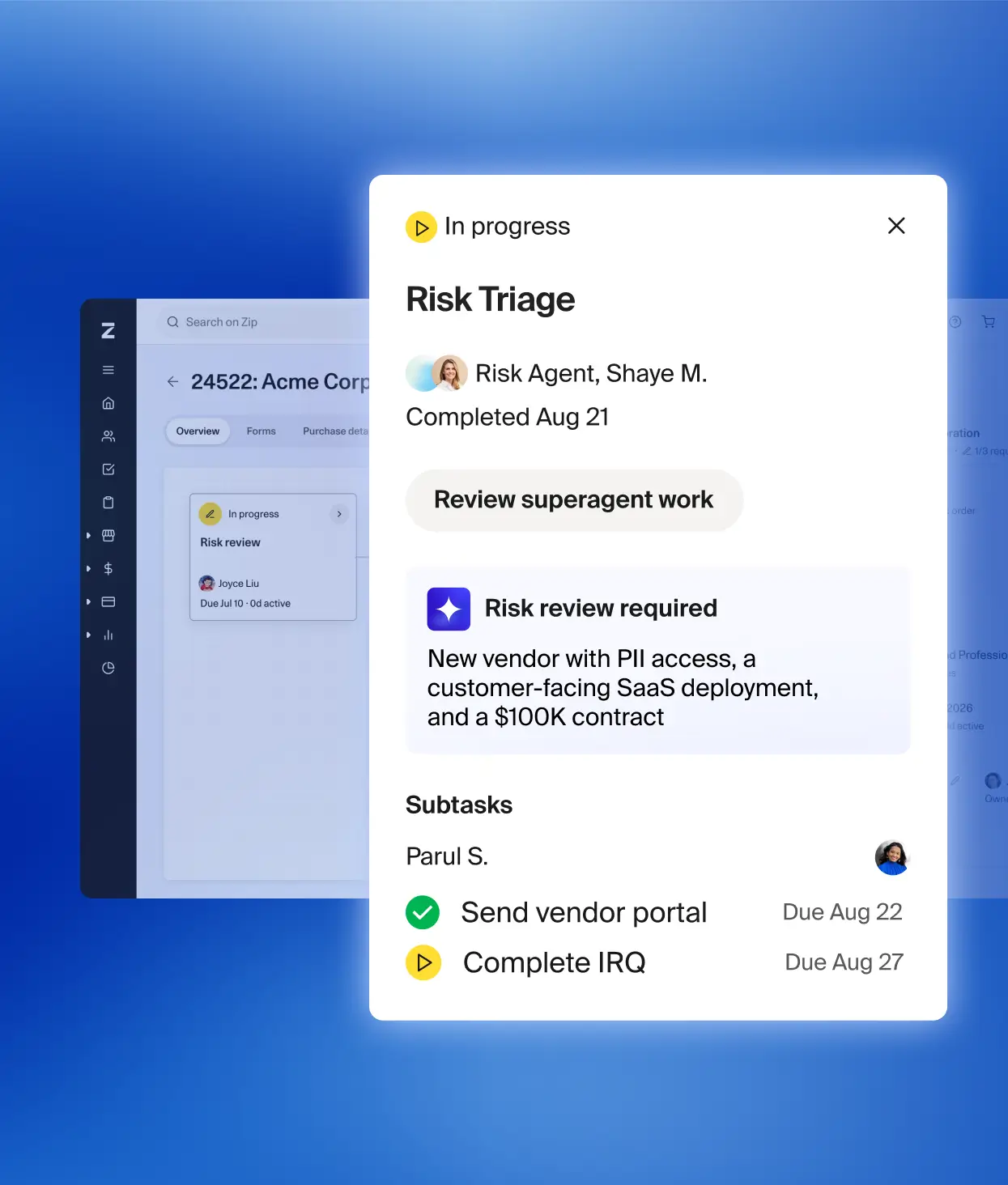

Risk triage & scoring
Automatically screen and score vendors for risk. Fast track reviews of low-risk vendors and route high-risk ones for a deeper look.
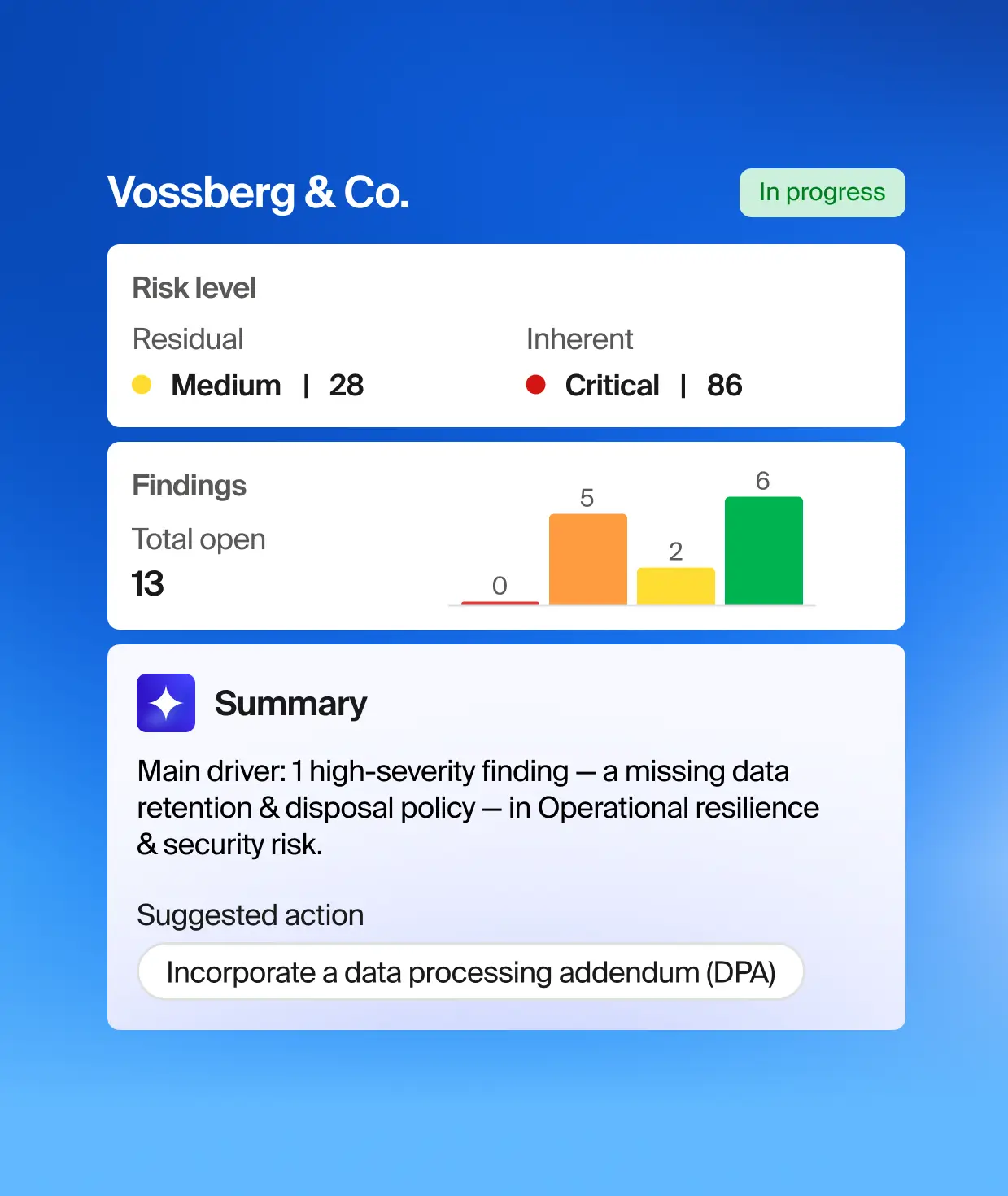

Risk assessment
Analyze surveys, documents, and external intelligence to surface key risks and outline mitigations.
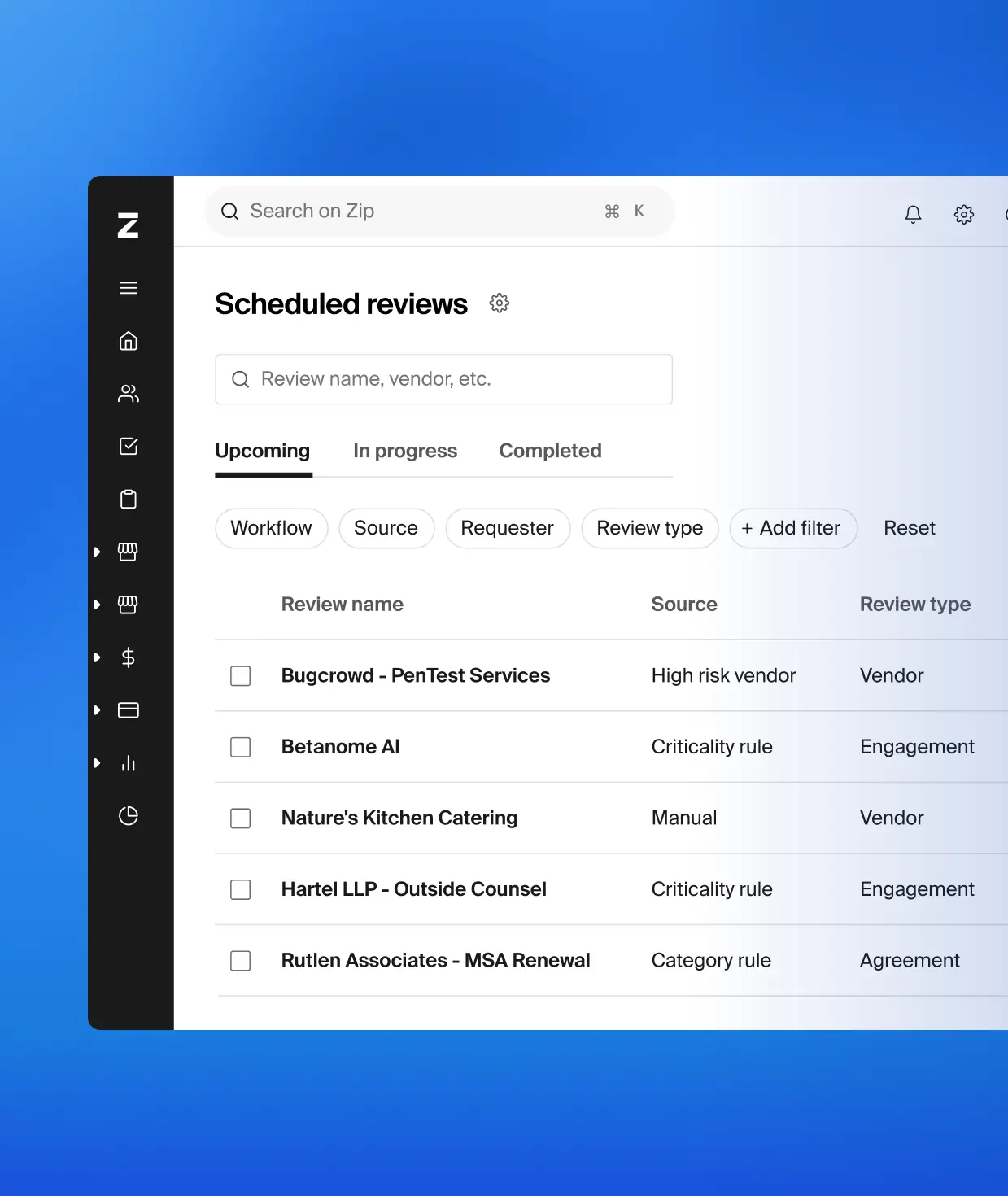

Risk review scheduling
Recommend risk assessment dates and scheduled review workflow based on vendor risk tier.
.webp)
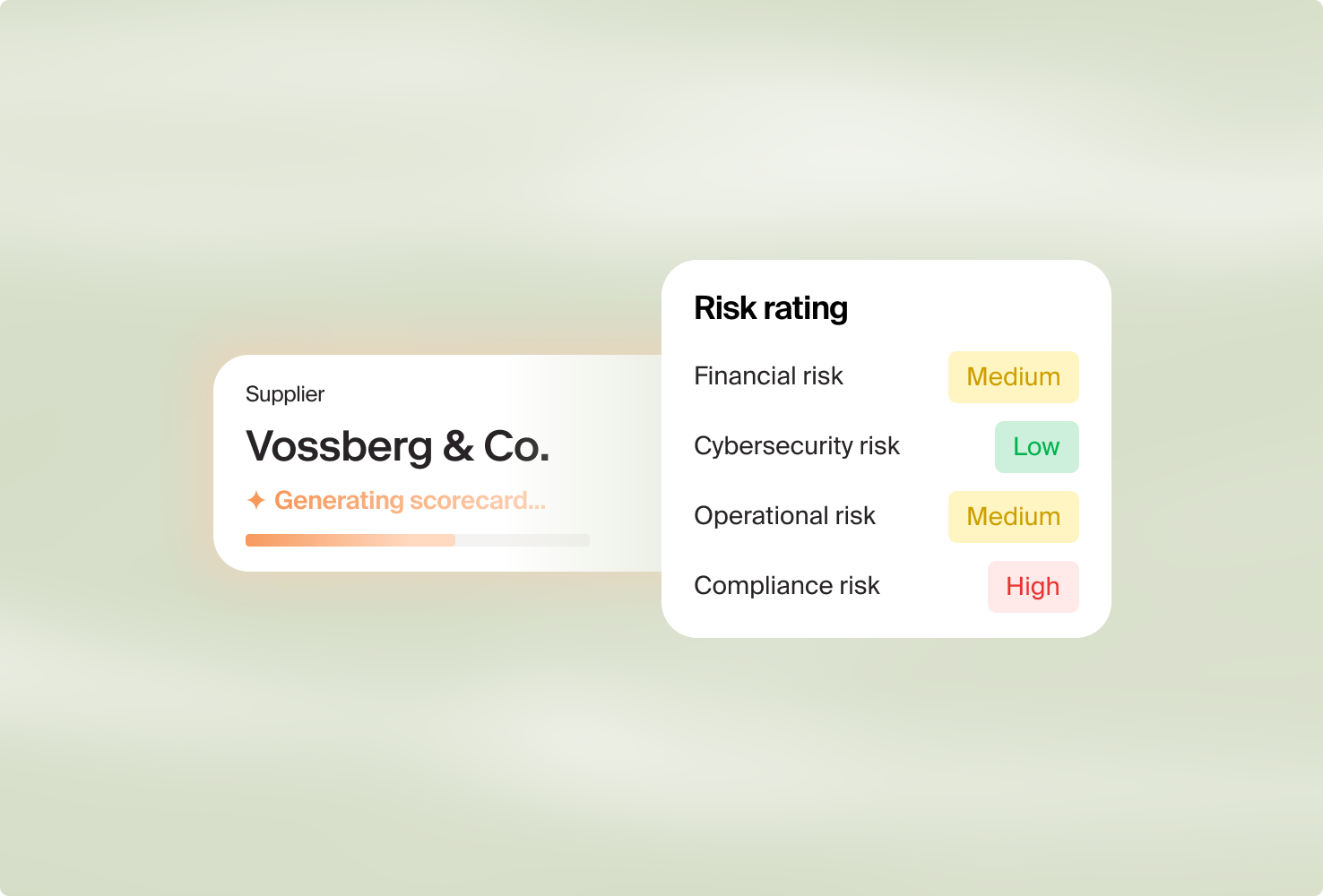
Intelligent risk scoring & finding
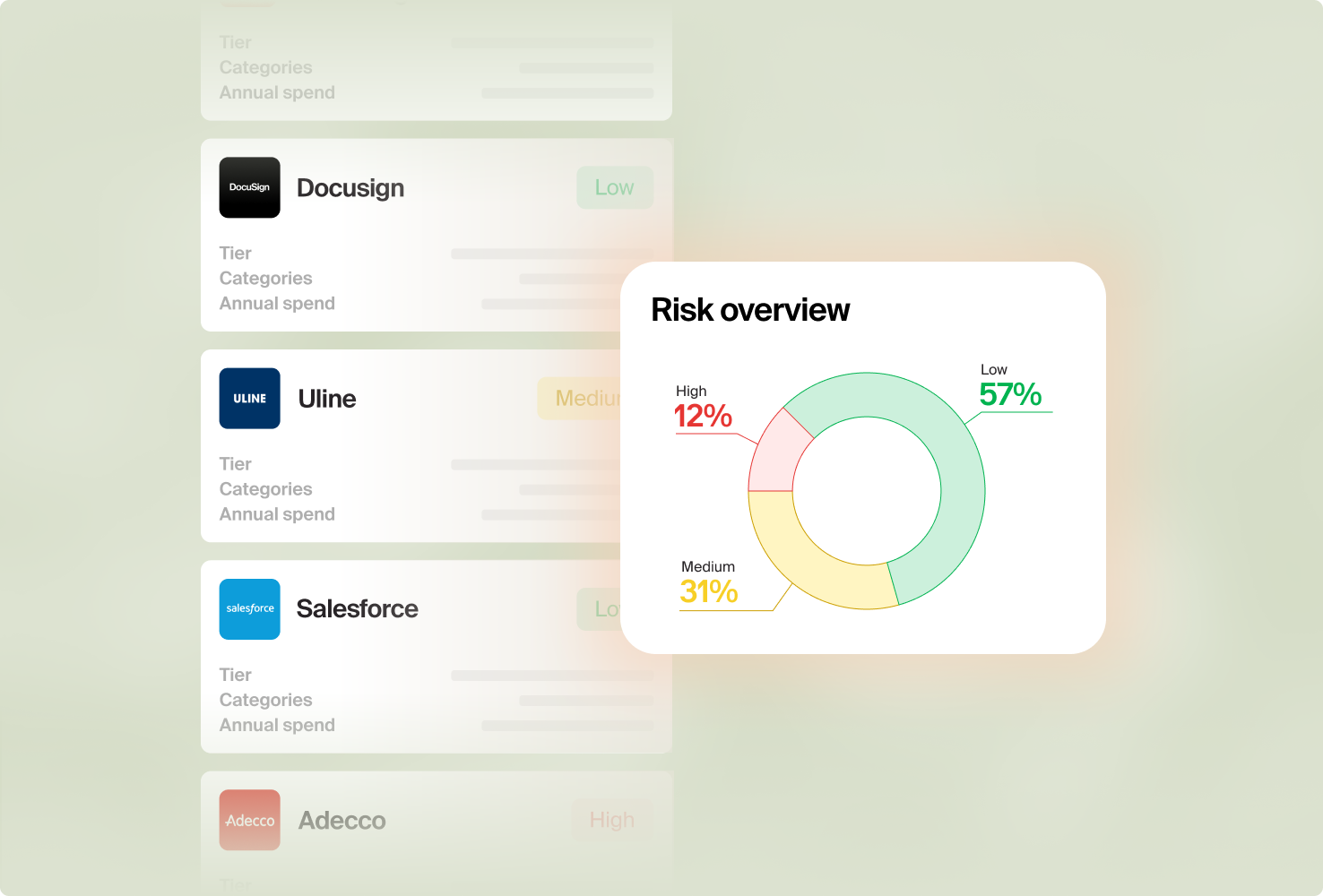
Score suppliers based on multiple data sources, assign risk tiers, and determine the next best action.
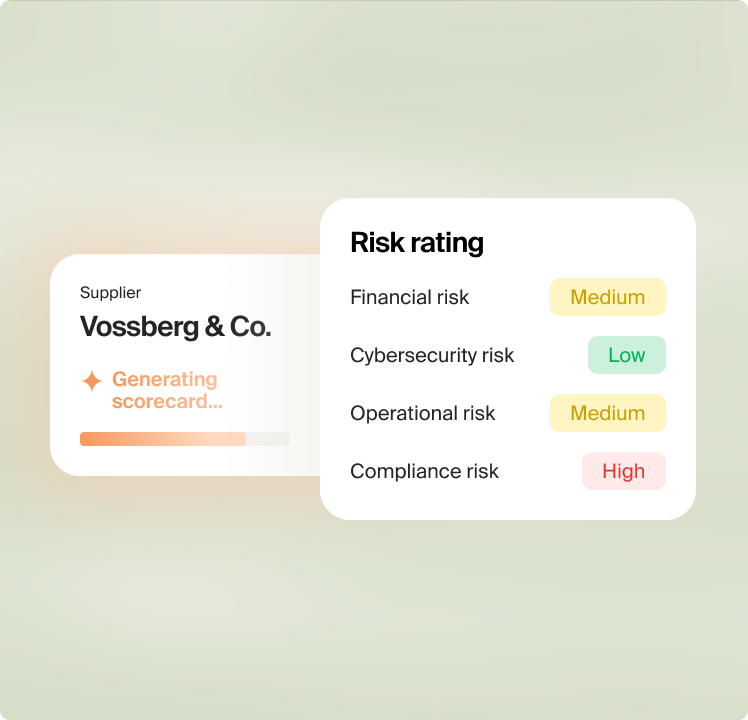
AI-powered supplier assessment
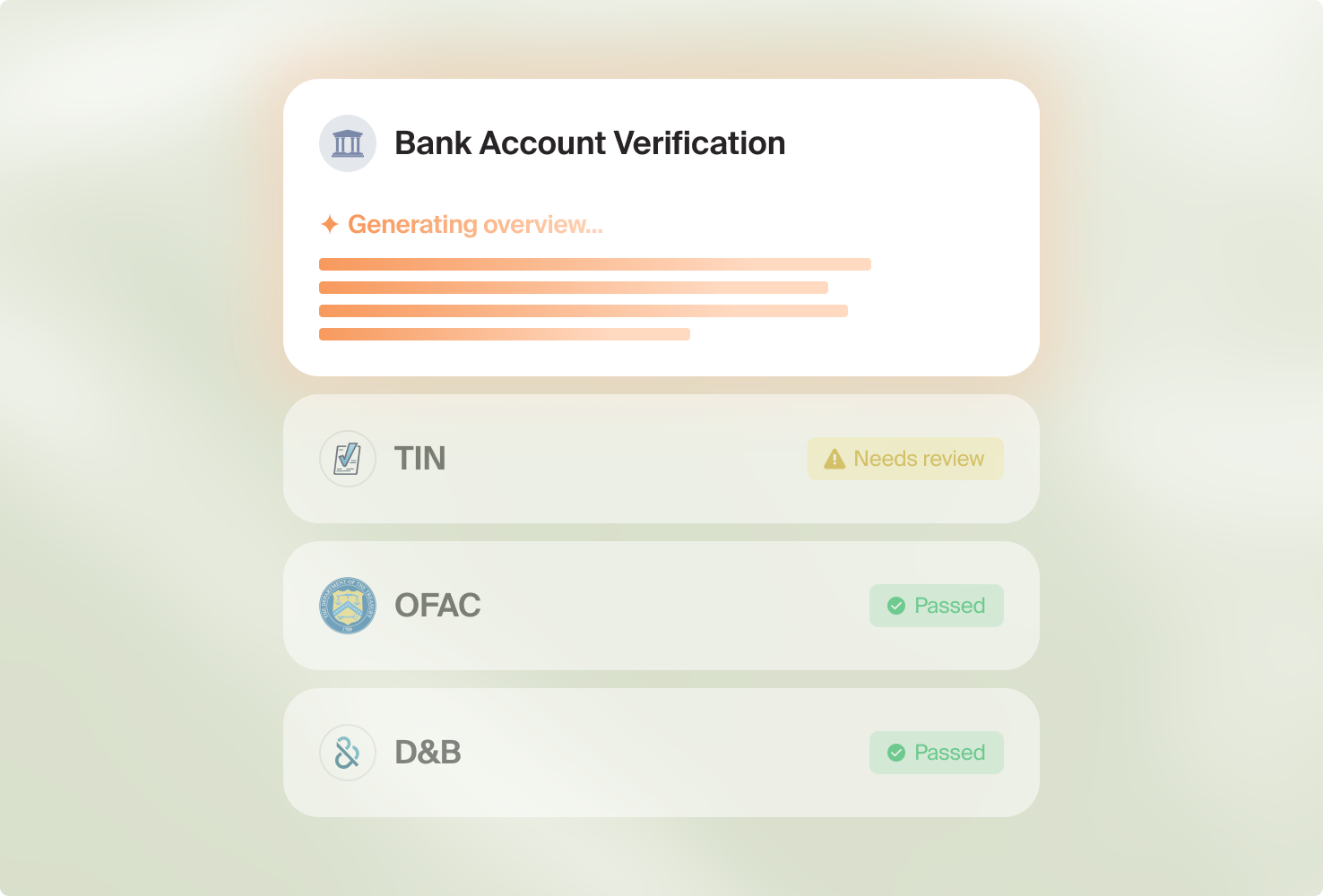
Automate third-party checks like TIN, VAT, OFAC, D&B, and bank account verification.
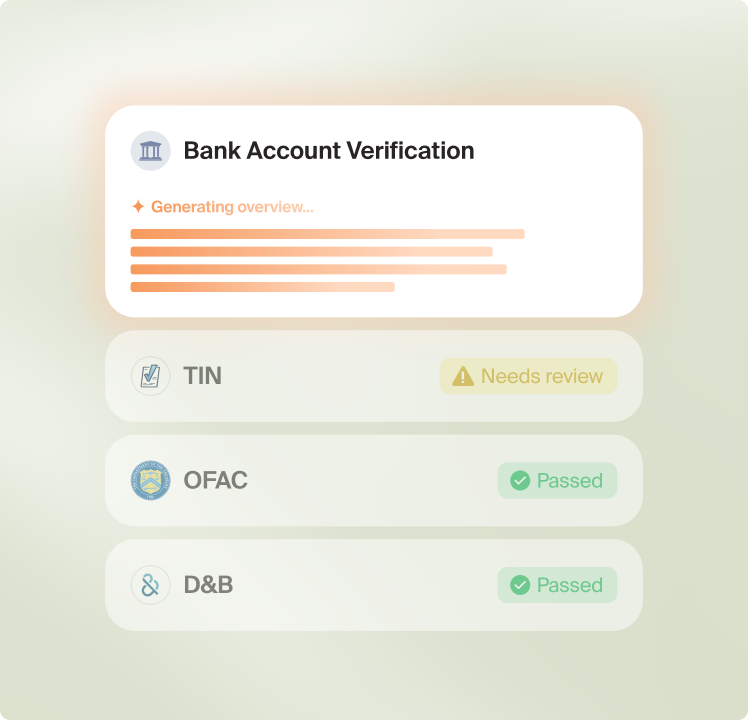
Right-sized approval workflows
Streamline low-risk scenarios and surface high-risk suppliers for review based on risk level, spend, and regulatory requirements.
.webp)
Centralized risk repository
Create a single source of truth for supplier risk data so teams always work from a centralized, trusted record.
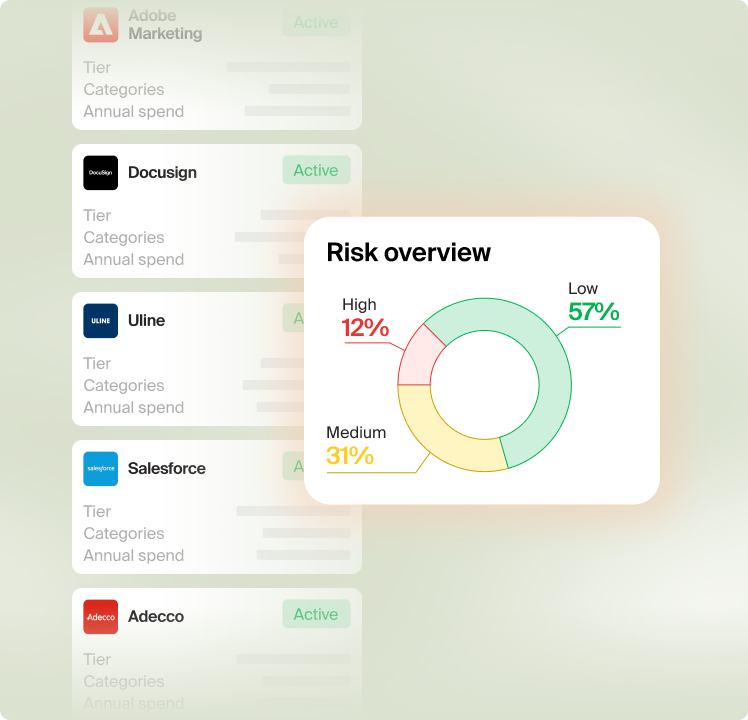
Complete audit trail
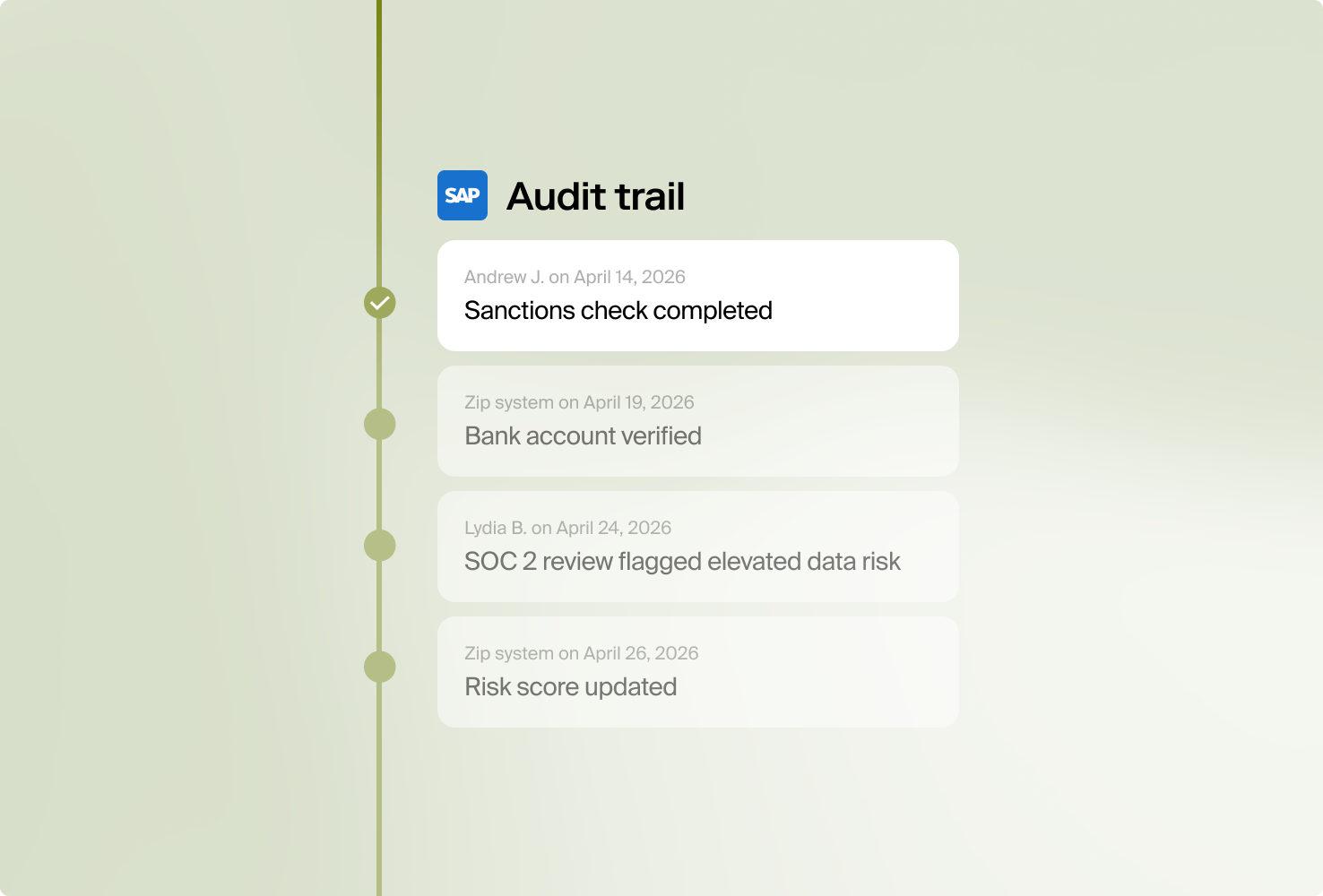
Capture every action in searchable audit logs for full traceability, reducing last-minute audit stress.
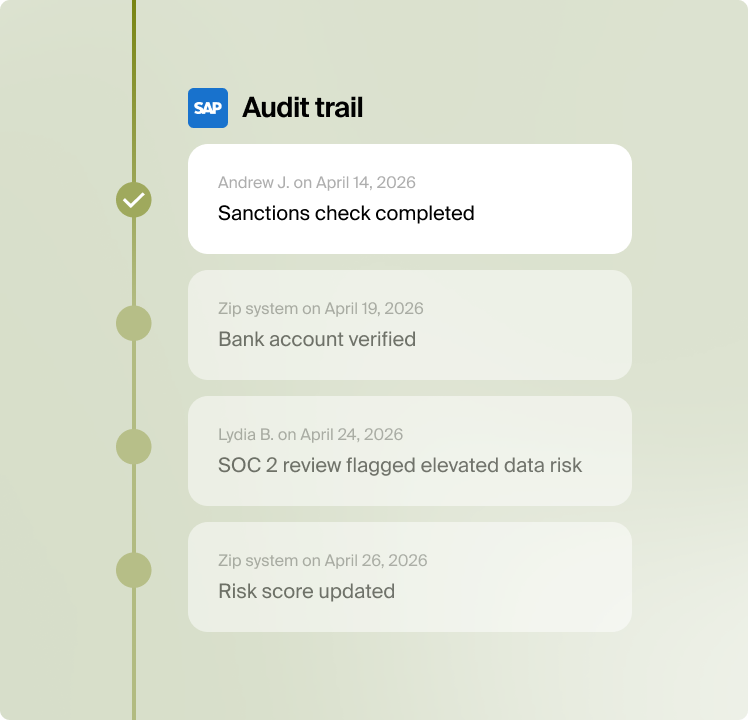
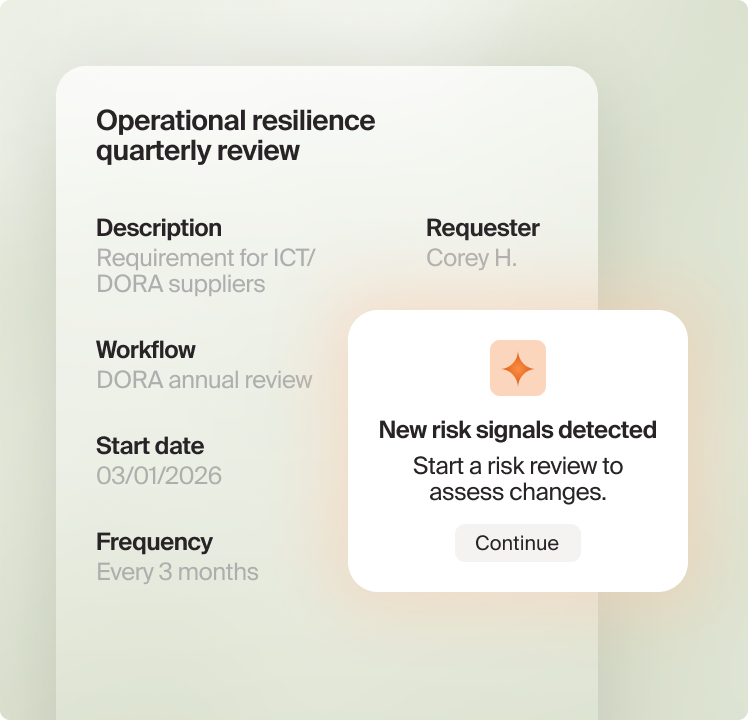
Continuous monitoring
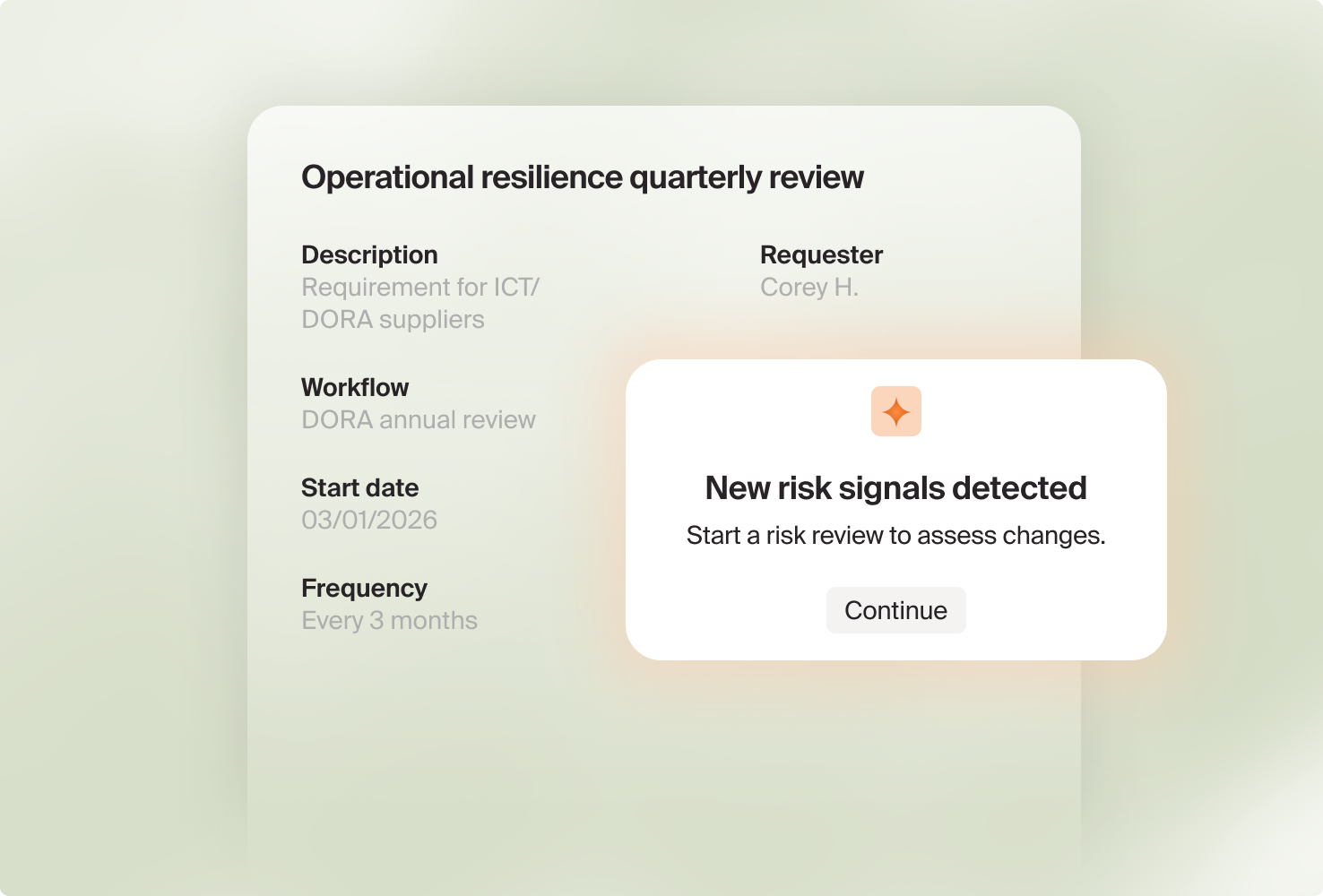
Watch for adverse signals by monitoring always-on feeds from Blackkite, LSEG World Check, and more.
Proper risk management with every purchase
Unified visibility & collaboration
Flow details from the intake form to risk questionnaires to eliminate manual data entry.
Risk-based intake enforcement
Flag inconsistencies during intake against internal policies, and halt payment as needed for risk enforcement.
Automated action
If risk scores exceed thresholds, reroute the workflow and automatically follow up with vendors to gather evidence.
.webp)
With Zip, we finally have visibility into how supplier risks are being managed across the bank.
James Drury
Head of Supplier Risk & Assurance
.png)

.png)
Frequently asked questions
FAQs
What is risk orchestration?
Risk orchestration is the practice of connecting every step of supplier risk management into one automated, continuous workflow. In procurement, risk orchestration automates third-party risk management directly inside the buying process. When a purchase request comes in, the platform triggers the right due-diligence checks, scores the supplier, routes approvals by risk level, and monitors that supplier over time.
What are the main types of risk in procurement?
The main types of risk are supplier risk (a vendor failing or underperforming), compliance risk (violating regulations or internal policy), financial risk (fraud, cost overruns, hidden liabilities), operational risk (supply shortages or delays), and reputational risk. Effective programs assess all five at intake and monitor them continuously.
How does AI improve third-party risk management?
AI improves third-party risk management by automating manual steps. It runs screening checks (TIN, VAT, OFAC, D&B, bank verification), scores suppliers across multiple data sources, flags high-risk vendors, and follows up automatically to collect evidence. This cuts manual review work by up to 90% and keeps monitoring continuous instead of point-in-time.
How does Zip help with compliance against DORA, SOC 2, and other regulations?
Zip has purpose-built skills for regulatory workflows: a DORA screening skill that identifies and documents ICT third parties, and a SOC 2 review skill that assesses vendors' security reports. Both run inside the procurement workflow so compliance evidence is captured as part of onboarding.
What's the difference between Zip’s Risk Orchestration and a GRC platform?
A GRC platform is a standalone system for logging and reporting on risks across the enterprise. Zip’s Risk Orchestration is an AI-native risk solution embedded in the procurement workflow. If you have an existing risk management tool, Zip can either replace or integrate with it to both record and manage risks at the point of intake.
Is risk orchestration software worthwhile?
The average cost of a third-party incident is ~$5M. By doubling a company’s risk coverage, Risk Orchestration reduces the risk significantly, all while cutting down cycle times sharply for a safer, more efficient organization.