
5 takeaways from the 2026 Gartner Procurement Conference
Takeaways on AI agents, data governance, and vendor selection from San Diego

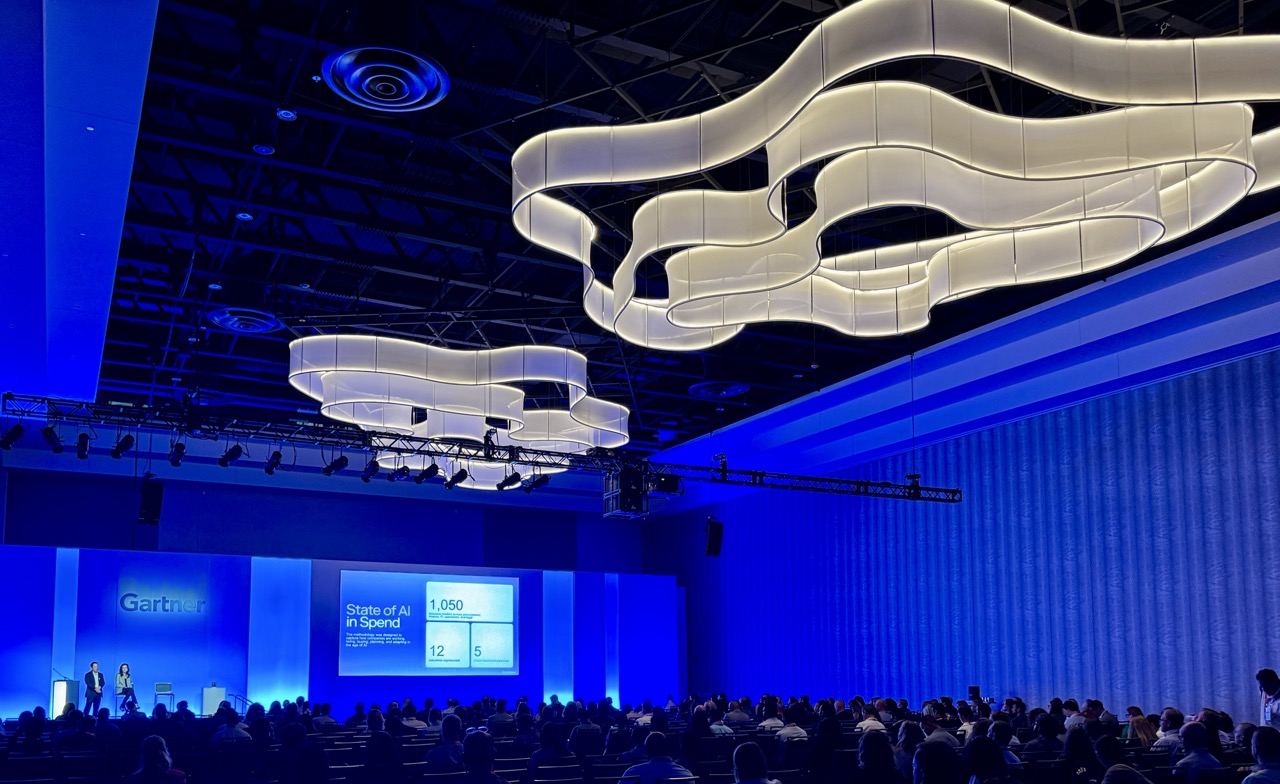
I spent last week in San Diego at the first-ever Gartner Procurement Conference. And as this is a 2026 event, to no one's surprised, AI agents made an appearance on nearly every slide.
What’s stuck with me these past few weeks was how often Gartner's analysts came back to the same prerequisites: better decisions, governed data, human judgment, and teams reorganized around the technology.
Zip reached that same conclusion in our State of AI in Spend research, and it came up again in almost every session I attended.
Here are my takeaways from the Gartner Procurement Conference in San Diego.
Lindsay Azim's keynote on augmented procurement
Gartner Senior Director Analyst Lindsay Azim opened the conference with a keynote on leading procurement into the AI era. Her central image framed the rest of the week.
For a century, she said, companies have bolted new technology onto old workflows.
Picture a factory that rips out its water wheel, wires in electricity, and keeps the exact same floor plan. Automation makes existing tasks run faster. Augmentation redesigns how people and machines make decisions together.
For CPOs, that changes how value gets measured. Azim said executives have stopped asking whether a tool pays for itself. They want to know what kind of enterprise AI it's helping them build, and they judge that by operating resilience and competitive advantage. A slightly cheaper PO doesn't answer the question.

What makes a real AI agent, according to Ryan Polk
Gartner VP Analyst Ryan Polk gave the cleanest definition of an agent I heard all week, in his session on the questions AI is forcing procurement leaders to confront. A true agent perceives its environment and acts on its own. If it only answers questions, it fails his test.
Then he asked “what happens once every team has agents?”
At that point, he said, “the technology stops setting anyone apart, and advantage moves to human judgment.”
That means the non-standard work with no playbook and no SOP behind it. Pattern-based work gets automated. Judgment-based work grows.
Polk named data as the blocker, and he meant more than master data. He meant governance over the structured, semi-structured, and unstructured data where work actually happens: Slack threads, hallway calls, and context that lives in one person's head. Without governance over that material, he argued, you won't get agents worth trusting.
David Epstein on constraints and your AI roadmap
The sleeper hit was the guest keynote from David Epstein, the #1 New York Times best-selling author of Range.
His argument was that constraints focus creativity. When Steve Jobs returned to Apple in 1997, Epstein said, he drew a two-by-two on a whiteboard, killed every product outside it, and shipped four.
The easiest mistake with agents is trying to automate everything at once, so this story fits the moment. Two of Epstein's exercises translate directly to an AI roadmap.
The first is to write the press release for your initiative before you build it, which forces you to name the problem and the audience. The second is to set a decision deadline, because not deciding has a cost too. With every vendor promising everything, deciding what not to automate may be the most useful call you make this year.
How to read the Gartner Magic Quadrant for Source-to-Pay Suites
Gartner analyst Magnus Bergfors ran the Source-to-Pay Magic Quadrant session. He kept repeating one instruction: don't build a shortlist from the Leaders quadrant alone.
He wants buyers to match vendors to their actual use cases using the Critical Capabilities report. Then he wants them to weigh what the quadrant can't show:
- The partner network and systems integrators who will extend the platform
- The customer community and user conferences where teams share best practices
- The product roadmap, and whether the vendor's vision matches yours
- Implementation quality and post-go-live support
A full source-to-pay rollout can run two to three years, so Bergfors told the room to "negotiate with that timeline in mind." Even the best product stalls without real change management.
The next Magic Quadrant is in progress, with an update expected in January.
AI ROI in procurement: builders vs. bystanders
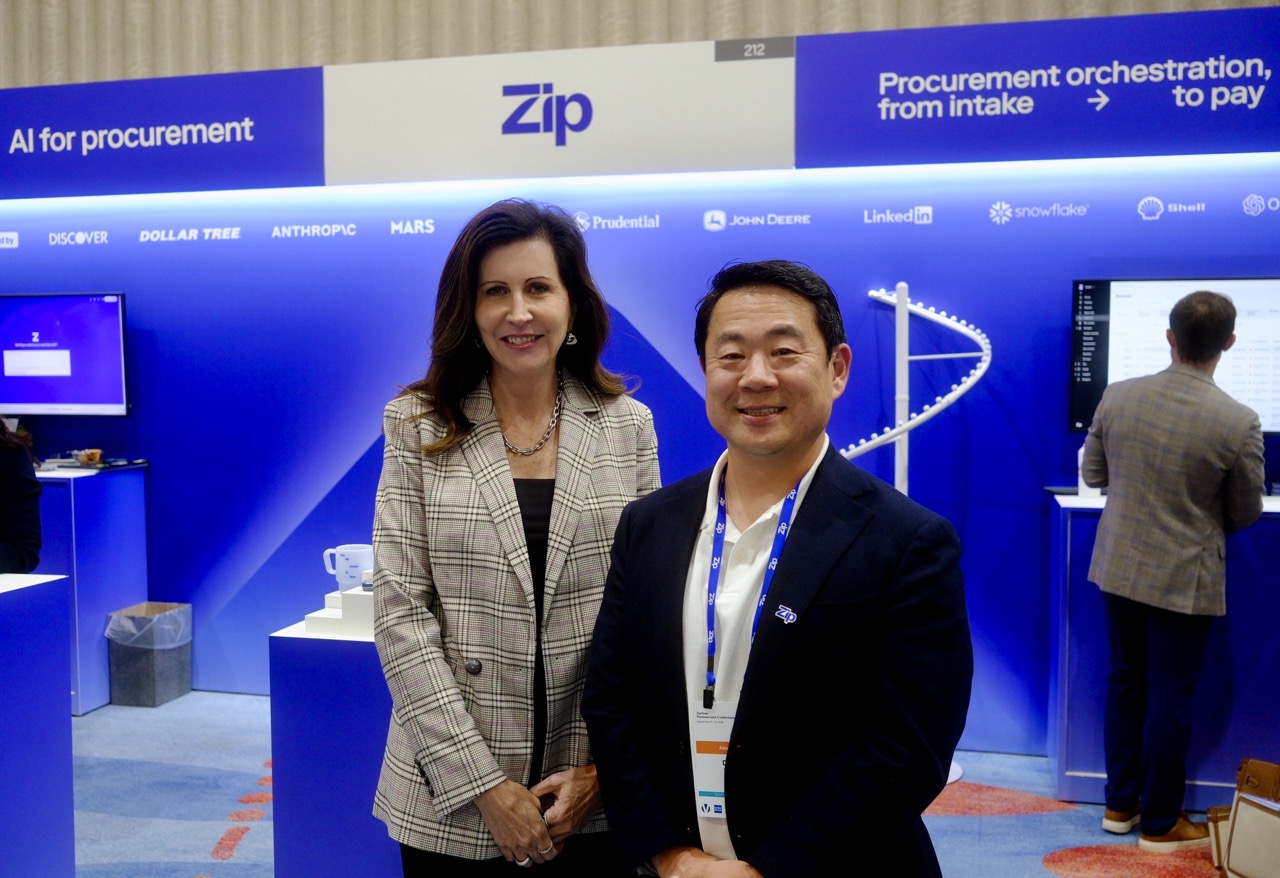
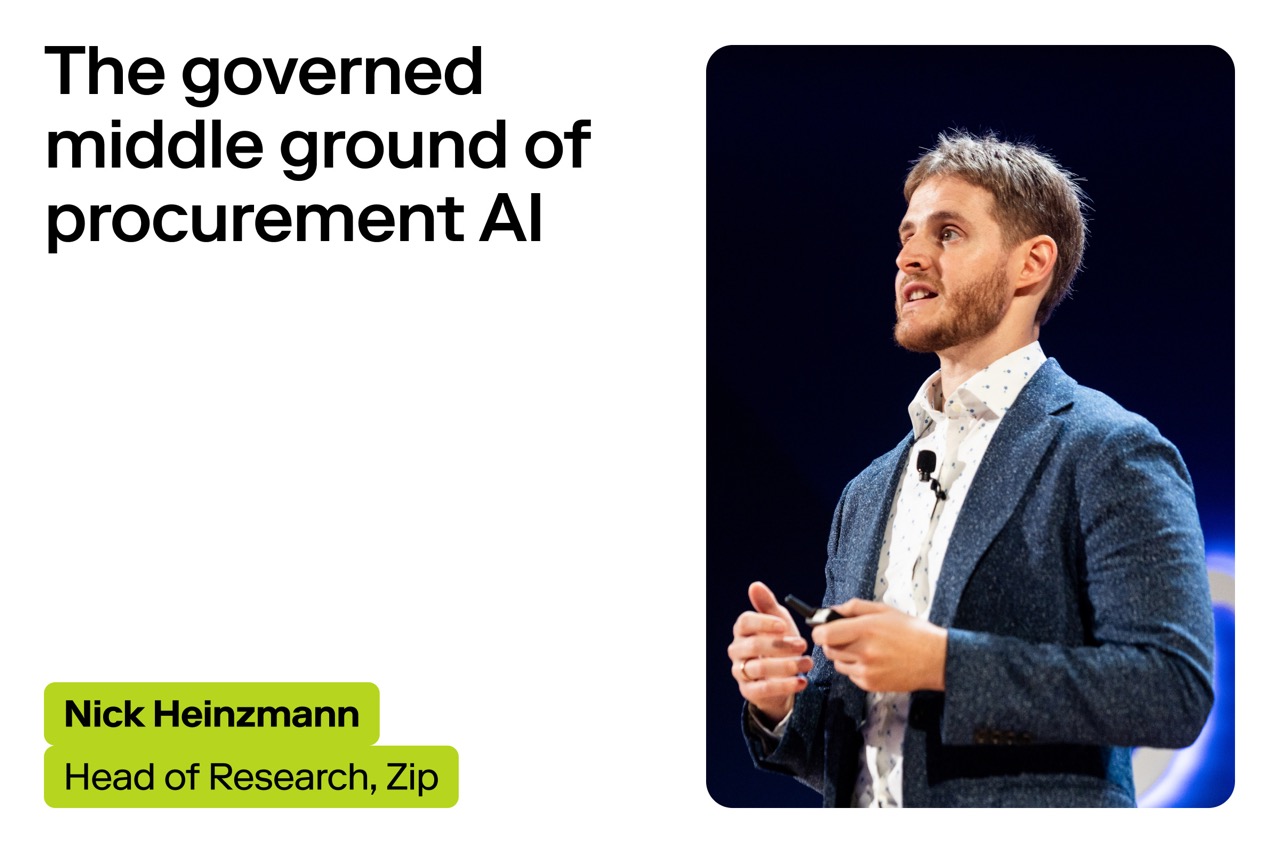
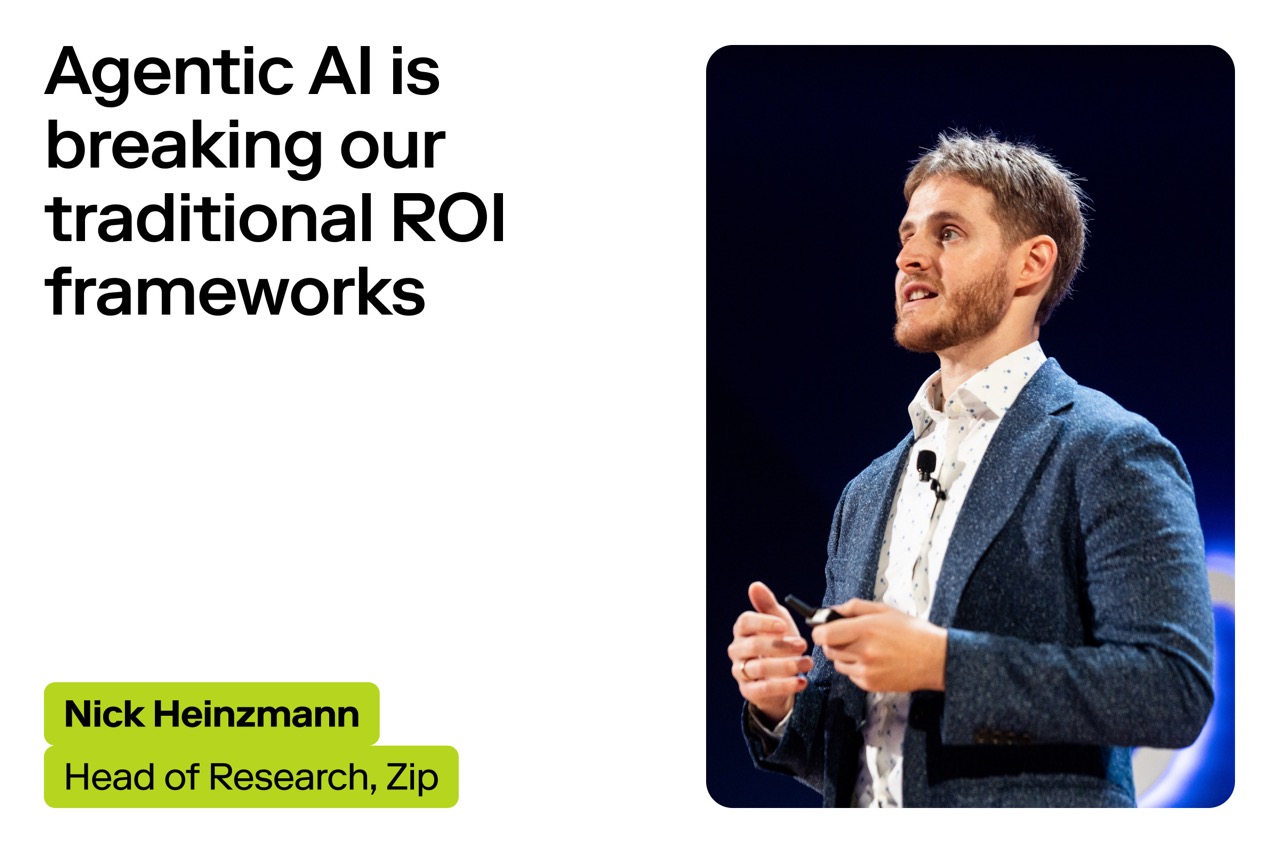
My own session was a fireside chat with Sherrie Schaufele of Western Digital about Zip's new State of AI in Spend report.
We spent most of it on the report's sharpest finding, which is a widening divide between builders and bystanders. Only builders are capturing the real ROI from all of this new tech. How much AI a company buys doesn't predict which side it lands on, but the depth to which it restructures its procurement team, and the roles within, absolutely does.
Sherrie's team is a builder. She got her returns by reworking roles and workflows until her people and the AI were operating in the same process. That is Azim's augmented model and Polk's judgment argument in practice. Polk even pointed to our session from the stage as his answer for where advantage comes from once AI is everywhere.
Zip Superagents on the main stage
Zip's Trevor Parus showed what that looks like in software during a live demo on the main stage.
He opened with a sobering number from our State of AI in Spend report: only 17% of organizations have unlocked real AI ROI. The other 83% mostly bought AI without rebuilding around it.
Trevor then demoed Zip Superagents, the first governed AI workforce built for procurement and finance. On stage, Superagents reviewed contracts, unblocked approvals, coded invoices, and researched vendors. All of that happened inside a company's existing approval controls, with a complete audit trail.
The analysts spent two days asking for governance and data discipline, and Superagents builds both into the product so the AI runs inside the organization's controls.
The full data behind the builder and bystander divide is in the State of AI in Spend report.

%20Large%202.jpeg)




%20Large.jpeg)


.webp)


AI procurement orchestration, from intake to pay
Enter your business email to keep reading
