
The governed middle ground of procurement AI
What a second IDC MarketScape says about where procurement AI is headed.

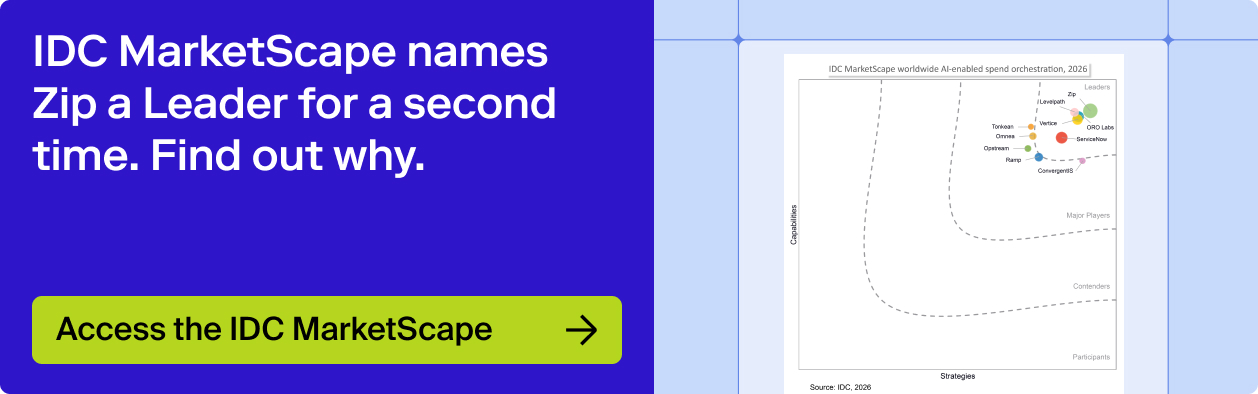
Two years ago, the first IDC MarketScape for spend orchestration effectively declared that orchestration was a real category, with its own market and its own competitors, distinct from source-to-pay. This week, the 2026 IDC MarketScape for Spend Orchestration Vendor Assessment names Zip a Leader for the second time, but it also marks how far the category has moved since.
The thesis has evolved. In 2024, orchestration was the workflow layer connecting stakeholders, processes, and data across a fragmented procurement environment.
In 2026, orchestration and source-to-pay have started to overlap. Some vendors are partnering, others are consolidating, and more of that is coming. Underneath the movement is a simple recognition that orchestration is the capability that enables the future of procurement, because we believe orchestration is the foundation on which AI gets delivered in the enterprise.
Two camps with opposite problems
Here is the market as I see it right now.
On one side you have traditional source-to-pay suites. They have the governance and the system of record, but they were not built for what is coming. They lack the underpinnings to deliver multi-agent procurement, because that experience assumes an architecture these systems do not have.
On the other side you have a wave of AI-native tools with powerful technology and genuinely new concepts. What they lack is the governance and the interoperability to run agents across multiple systems, in both the deterministic and probabilistic ways that real procurement requires.
Orchestration sits in the middle, and it is the part that works today. It is also the launch point into what comes next. That is the whole argument for why this category matters, and it is why an orchestration layer with real governance is where enterprises are placing their bets.
Where spend orchestration and procurement AI go next
What I’m now asking is where the source-to-pay market goes from here, because it is turning into something the industry does not have a settled name for yet.
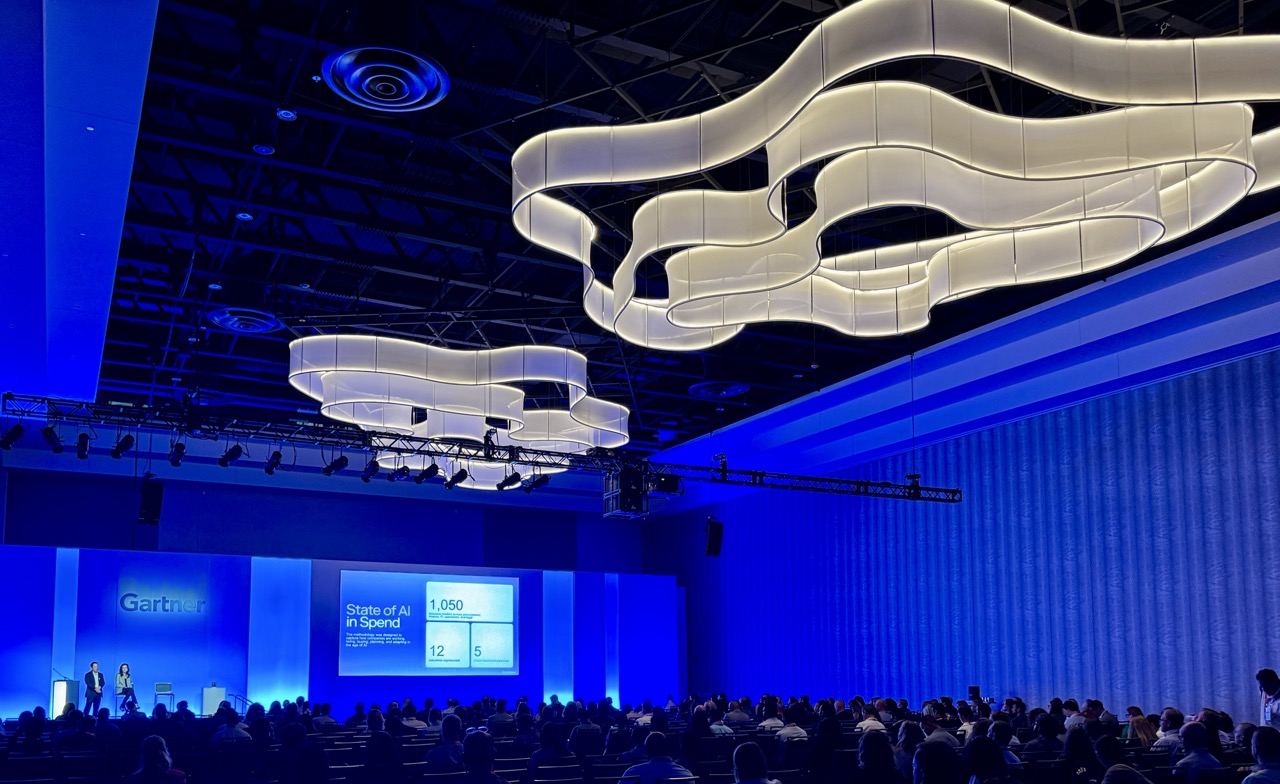
Gartner's hype cycle points at multi-agent systems for procurement. Both are circling the same frontier, which is AI that goes past discrete, task-based agents and assistants, and toward systems that can take on strategic, complex work running across an entire workflow.
That work has specific characteristics in procurement. It gets built and delivered on a governed AI orchestration platform. Headless models, multi-agent systems, an operating layer for spend; whatever the category ends up being called, it runs on the foundation orchestration provides. A traditional suite cannot bolt this on. An ungoverned AI tool cannot be trusted to run it. This is the imperative the 2026 assessment puts at the center of the market.
What we emphasize is optionality. Enterprises can adopt orchestration for the value it delivers today and scale with us into the multi-agent future as it arrives, without betting on an architecture that cannot get them there.
Download the IDC MarketScape: Worldwide Spend Orchestration 2026 Vendor Assessment excerpt →
%20Large.jpeg)
%20Large.jpeg)
%20Large%202.jpeg)




%20Large.jpeg)


.webp)


AI procurement orchestration, from intake to pay
Enter your business email to keep reading
