
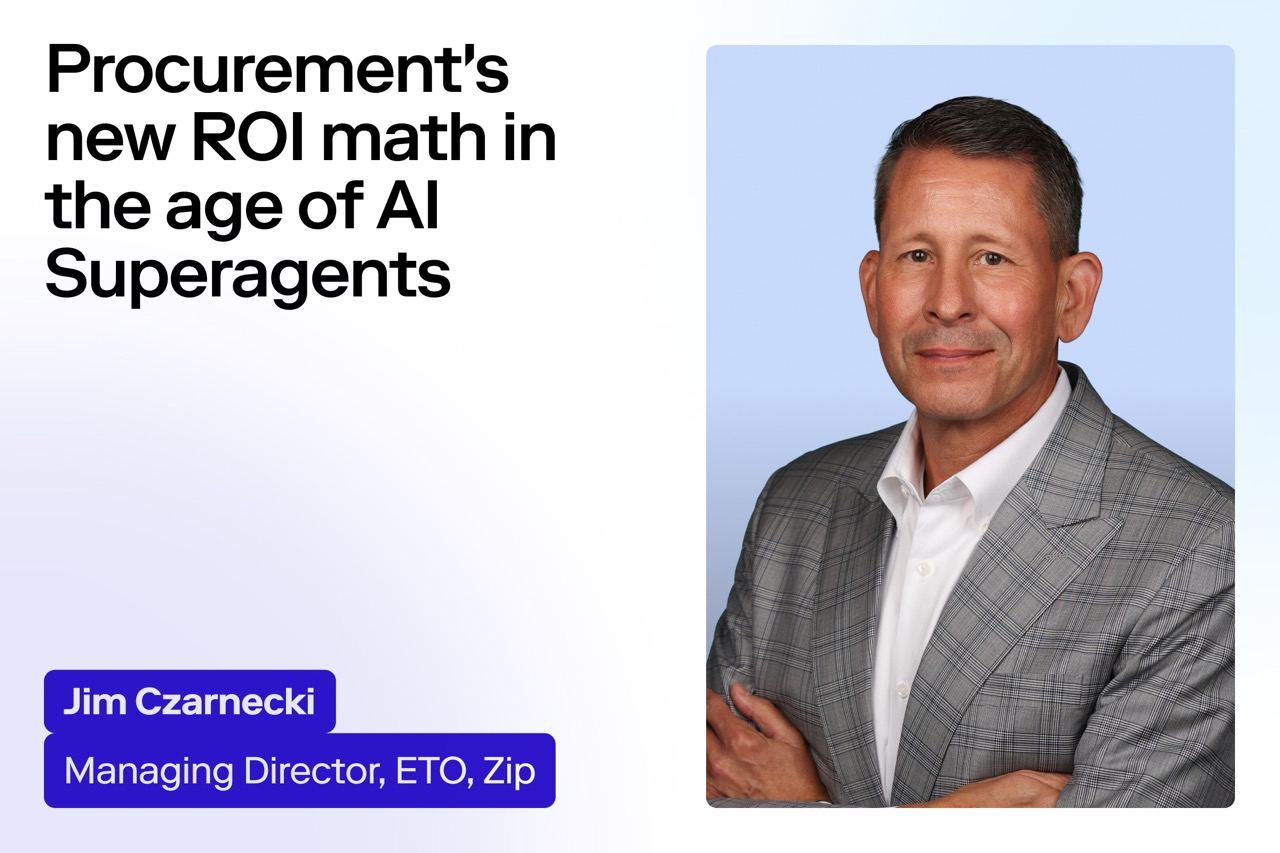
Procurement's new ROI math in the age of AI Superagents
Notes from a CPO on the spend most teams undermanage and AI can finally fix.
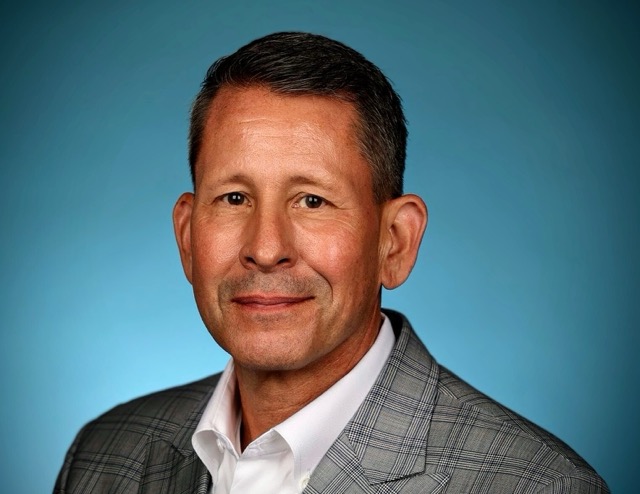
I spent years running procurement in a business where margins were tight enough that every dollar had to earn its place on the P&L. This kind of experience changes how you read every investment decision that crosses your desk, and it's the reason the talk about investment in AI transformation, in my view, often starts in the wrong place.
Most of the debate I hear is about the cost of the tech. But for a forward-thinking CPO, what really matters most is where the actual leverage is.
This holds across any business where margins are structurally thin: distribution, manufacturing, food service, healthcare services, transportation, contract services.
No matter your industry, it’s time to run the numbers.
Indirect spend is the sleeping giant on your P&L
Most low-margin operators have a firm grasp on direct spend, be it the cost of goods, the inputs, or the production labor; those numbers get watched daily.
Indirect spend gets far less attention. Here I’m referring to important, but under-surfaced things like the facilities contracts, the marketing services, the IT vendors, the professional services, the MRO supplies, the temp staffing, the travel and expenses.
In a typical $1B operation, indirect spend runs 10-15% of revenue.
Let’s call it $120M.
That $120M is largely managed through a combination of disconnected approval workflows, email chains, maverick purchasing, and procurement teams that are perpetually understaffed relative to the volume of requests they field.
Nobody sets out to manage it poorly; indirect spend is diffuse, high-volume, and low-visibility by nature. It grows with the business and rarely becomes anyone's clear priority.
But any good executive should know their numbers. Ask yourself: what is 1% of $120M?
It's $1.2M, falling straight to EBITDA.
What $1.2M in indirect spend savings means at thin margins
If your business runs at a 2% net margin, generating an incremental $1.2M in profit requires $60M in additional revenue. That means new customers, new contracts, or new markets; all of which carry their own costs, risks, and lead times that stretch across quarters or years.
For a business operating at 2% margins, a $1.2M improvement in indirect spend efficiency is the P&L equivalent of growing the top line by 6%. A 6% revenue increase doesn't happen quietly. It requires sales investment, capacity expansion, customer acquisition, and months of execution with uncertain outcomes.
The indirect spend improvement requires fixing a process that already exists inside the four walls of the organization.
That's the core of the leverage argument. Indirect spend savings are a high-multiple, low-friction path to bottom-line impact that most organizations systematically underinvest in, because the savings are invisible until someone goes looking for them.
Why indirect procurement is hard to manage without AI
The reason 1% of indirect spend stays on the table isn't due to negligence but is instead structural.
Indirect procurement is defined by three problems that compound each other regardless of industry.
1. Volume without visibility.
Thousands of purchase requests across dozens of categories, flowing through informal channels.
No single person has a complete picture of what's being bought, from whom, and at what price relative to what was contracted. The data does exist somewhere; be it in ERP systems, email, spreadsheets, or even in legacy P2P systems that employees don’t like to use. It isn't connected in a way that makes patterns visible in time to act on them.
2. Maverick spend that's frictionless to execute and expensive to catch.
An employee who needs something today will find a way to get it.
The path of least resistance bypasses the preferred vendor, the negotiated rate, and the approval workflow all at once. By the time a quarterly review surfaces the deviation, the money is gone and the behavior has repeated dozens of times.
3. Procurement teams stretched too thin to manage proactively.
The ratio of procurement staff to spend under management in indirect categories is typically far worse than in direct.
Teams are reactive rather than strategic, approving requests rather than optimizing them, firefighting exceptions rather than preventing them.
None of this is solvable by adding headcount.
The spend volume grows with the business. The maverick behavior is distributed across the whole organization. The visibility gap widens as complexity increases.
More people running the same manual process won’t find themselves closing the gap, but instead make the gap more expensive to maintain.
What AI Superagents do in the procurement workflow
AI agents in the procurement workflow will never fully replace human judgment. What they do is extend it at a scale no team could sustain manually.
The interventions that move that $1.2M number are concrete and repeatable.
Compliance enforcement at the moment of request.
An agent reviewing every purchase request in real time can flag non-preferred vendors, suggest contracted alternatives, and require justification for exceptions before the PO is issued, rather than after a quarterly review surfaces the damage. In any process where transaction volume is high, prevention beats remediation.
Invoice matching and discrepancy detection without delay.
The three-way match, PO against receiving record against invoice, is well understood and completely automatable. Agents process it at volume, flag variances within hours, and route only genuine exceptions to a human. Leakage that previously aged for weeks gets caught at the point of occurrence.
Spend pattern analysis that surfaces renegotiation opportunities.
An agent analyzing purchase history across categories can identify where spend concentration has grown to the point that pricing should be renegotiated, or where consolidation across departments could yield volume leverage that currently sits invisible in siloed data. This is work procurement teams know they should be doing and almost never have bandwidth for.
Contract compliance monitoring against actual purchase behavior.
Knowing what's contracted is one thing. Knowing whether the organization is actually buying against those contracts, and routing exceptions back to preferred channels, requires continuous monitoring at the transaction level.
It’s here where I've watched early agent deployments succeed or stall.
The interventions that actually work hold a conversation with the requester. They reason through the exception instead of just rejecting it, coordinate across the invoice, the contract, and the vendor record at once, and get sharper as purchase data accumulates.
A scripted bot that runs once and produces a single output can catch the obvious cases.
Closing the gap on the $1.2M takes agents that adapt to the situation in front of them and keep working the same categories month after month. That’s the whole game right there, a point that too many conversations on cost forget to consider.
AI procurement savings only count when they're governed
But there's a second half to this ROI math.
Your teams are already using AI—it just lives in an open tab next to their work.
They're researching vendors in ChatGPT, drafting contract language in Claude, triaging requests in whatever tool is fastest. I understand the instinct to use AI to work faster.
The problem though is that none of it is governed. There's no audit trail, no policy enforcement, no consistency from one analyst to the next.
That's a liability that compounds. When an auditor asks six months from now how a particular decision was made, "someone's personal AI chat history" is not an answer that survives a SOX review. The savings you captured don't count for much if you can't show your work.
This is the line I would draw for any CPO weighing AI deployment.
The primary value of governed AI in procurement is that every action it takes is logged, attributable, and enforced against the policies you actually set.
An agent operating inside your procurement system, with role-based permissions and a complete audit trail, gives you the savings and the defensibility. An ungoverned tool gives you neither for long.
The longer that shadow AI runs, the deeper it sets in and the harder it is to unwind.
Rethinking AI consumption cost and ROI
The objection to agent deployment almost always lands on cost. It’s easy to map out the consumption model, the per-transaction pricing, the infrastructure to run it, but it’s a consideration at the wrong altitude of abstraction.
The correct ROI math requires comparing the agent costs to the value of the leakage it prevents.
If an agent operating across the indirect procurement workflow prevents $1.2M in leakage annually at a consumption cost of $50,000 to $150,000, the ROI conversation is effectively over before it starts.
What you’re buying is a process that turns a $120M unmanaged spend base into a managed one, and the P&L impact at a 2% margin business is equivalent to executing a $60M revenue initiative without the sales investment, the market risk, or the execution uncertainty that comes with any top-line program.
There's a compounding dynamic that a static ROI calculation understates. A top-line growth investment is a one-time effort with a one-time result.
But a process improvement run by adaptive agents runs continuously, catching the same categories of leakage month after month, improving as purchase data accumulates, and scaling automatically as the business grows.
That $1.2M in year one becomes the floor, not the ceiling.
The indirect spend savings are already on your books
Every low-margin business already has a savings opportunity. It's sitting in the gap between contracted rates and actual purchase behavior, between preferred vendors and maverick spend, between approved invoices and what was actually delivered.
AI is what finally makes that gap visible enough to capture and governed enough to keep.
What matters most for a CPO is how much leakage you continually leave on the table every quarter you wait to transform.
The companies we see getting the highest ROI are the companies already taking the leap and transforming procurement for the new era.
To see Zip’s governed AI-platform for procurement in action, request a demo today.
%20Large.jpeg)

%20Large.jpeg)




%20Large.jpeg)





.webp)






AI procurement orchestration, from intake to pay
Enter your business email to keep reading
