

What is procurement orchestration? The complete guide
How AI agents connect purchasing, contracts, and supplier risk in one workflow.

Procurement at many companies feels like a black box. Employees face opaque approval cycles and disconnected systems, so they go around formal channels. Rogue spend and compliance risk grow as a result.
Procurement orchestration replaces siloed legacy tools with a single workflow that spans the entire intake-to-pay lifecycle. Purpose-built artificial intelligence (AI) agents now work inside that workflow, so leading organizations are automating the manual tasks that used to slow everyone down.
This guide explains how procurement orchestration works and how AI accelerates its impact. It also covers the signs that your organization is ready for a dedicated platform.
What is procurement orchestration?
Procurement orchestration is the integration of the people, systems, and data involved in an organization’s spending lifecycle into a single workflow from intake to payment.
Legacy procure-to-pay tools handle individual tasks in isolation. Orchestration adds a collaboration layer above your existing tech stack, which includes enterprise resource planning (ERP), contract lifecycle management (CLM), and governance, risk, and compliance (GRC) systems.
Orchestration also gives cross-functional stakeholders one front door for purchase requests, sourcing, contracts, and supplier risk, and that includes risk and compliance teams. Canva cut procurement cycle times by 70% with this approach. Organizations using Zip have collectively saved more than $12 billion.
In its most advanced form, this approach becomes AI procurement orchestration. Standard orchestration routes a request from Point A to Point B. In AI procurement orchestration, purpose-built AI agents work on the request as it moves. They review legal documents, flag non-standard terms, and validate supplier information and compliance in real time. That frees procurement teams for strategic work and brings more of the company’s purchasing into spend under management.
What is AI procurement orchestration?
AI procurement orchestration is procurement orchestration with purpose-built AI agents embedded in the workflow. The platform processes, validates, and acts on requests throughout the intake-to-pay lifecycle instead of only routing them.
Zip’s AI platform for procurement coordinates the people, systems, and data involved in an organization’s spending lifecycle. Standard orchestration connects your tech stack and builds workflows on top of it. AI procurement orchestration adds agents that do the work inside those workflows.
Consider an employee who submits a new software purchase request. Purpose-built AI agents can pull the vendor’s security certifications from an email and cross-reference existing contracts for duplicate licenses. They can also validate the vendor’s tax information against external databases and flag non-standard legal terms. All of that happens before a human reviewer opens the request.
Zip was named a Visionary in the 2026 Gartner® Magic Quadrant™ for Source-to-Pay Suites. Zip is the youngest company ever recognized in the evaluation and the only AI procurement orchestration platform in the analysis. Zip customers have saved more than $12 billion and processed more than $1.4 trillion in spend on the platform, which connects to 100+ integrations.
How does procurement orchestration work?
Procurement orchestration is a collaboration layer that sits on top of your existing purchasing tech stack. IDC’s research on spend orchestration as enterprise infrastructure examines how organizations build on the systems they already have. It also covers the governance AI agents need in order to operate.
Most organizations already run a mix of tools. That mix usually includes an ERP such as NetSuite, SAP, Oracle, or Workday, a traditional procure-to-pay system, and specialized tools for CLM or security. Zip surveyed 1,050 procurement, finance, IT, and operations leaders for 'State of AI in Spend' research. In that survey, 54% said they run hybrid or best-of-breed stacks, and 8% use a single suite. Some companies add simple intake management so every request has a clear starting point. Orchestration goes further.
Orchestration manages the entire intake-to-pay lifecycle. It connects these systems through application programming interfaces (APIs), so they exchange data in real time. The platform coordinates parallel workflows in place of linear, manual handoffs. Legal, security, and finance can approve a request at the same time.
In a modern orchestration platform, purpose-built AI agents act on each request as it moves through the workflow. For example, an AI agent can pull a vendor’s security certificate from an email, upload it to your GRC tool, and check the expiration date. The agent finishes before anyone on the security team opens the request. Work that used to sit in a reviewer’s queue gets done while the request is in flight.
The strategic value of procurement orchestration
A procurement orchestration platform moves the function beyond ticket processing. The benefits show up in five areas.
Drive employee adoption
A single front door for all purchase requests removes the friction that causes non-compliance. When the intake experience is easy, employees use it. Procurement leaders then see spend before it is committed instead of after the invoice arrives. Patreon reached full employee adoption of Zip with zero training.
Accelerate cycle times
Orchestration replaces slow, linear approval chains with parallel workflows. Security, legal, and IT review requests at the same time instead of one after another. That shortens the time from intake to purchase order (PO). Dollar Tree cut procurement cycle times by 70% with Zip.
Automate complex routing
Manual triage is slow and error-prone. Orchestration platforms route each request to the right cost center owners and technical approvers based on user hierarchies and request criteria. In the 'State of AI in Spend' survey, 32% of leaders named inflexible or slow processes as the single biggest factor limiting procurement’s influence. Automated routing takes manual triage out of those processes.
Unify your tech stack
Orchestration helps cross-functional teams get more out of the tools they already use. Zip connects to 100+ systems, including ERP, CLM, GRC, and IT service management (ITSM) platforms. Stakeholders review and approve requests in the tools they prefer, and data moves between systems automatically.
Find savings with AI
Purpose-built AI agents validate data to prevent errors and leakage. They cross-reference vendor details, flag duplicate software requests, and surface budget insights in real time. Cribl’s Price Negotiation Agent uses third-party pricing benchmarks to pre-draft negotiation emails. It has delivered 15% average savings on contracts.
Procurement orchestration vs. procure-to-pay
Procurement orchestration and procure-to-pay (P2P) are related, but they differ in scope and approach. P2P covers the transactional lifecycle from purchase requisition through payment.
Orchestration covers the full intake-to-pay lifecycle. That includes intake, intelligent routing, cross-functional approvals, sourcing, contracts, and payment. On top of that, orchestration adds an AI-powered coordination layer.
P2P systems process transactions. Orchestration coordinates the people, tools, and data around those transactions. AI agents take on the manual work that used to fall to procurement teams.
Procurement orchestration vs. procurement management
Procurement management is the broad discipline of planning, sourcing, purchasing, and managing supplier relationships. It is a function and a set of practices. Procurement orchestration is the technology layer that runs procurement management at scale.
Procurement management is the what, meaning the strategy, policies, and goals. Procurement orchestration is the how, meaning the platform that coordinates the people, systems, and workflows that carry out that strategy.
Organizations don’t choose between the two. They use orchestration to make their procurement management practices faster, more visible, and more compliant.
AI procurement orchestration goes a step further. Purpose-built AI agents handle the manual execution, such as data validation, routing, and compliance checks. Procurement managers then have time for strategic decisions like supplier consolidation, category strategy, and spend orchestration.
Components of a procurement orchestration framework
A procurement orchestration framework has five components. A single logic layer governs all of them across the entire spend lifecycle.
Intelligent, AI-powered workflows
Manual touchpoints slow intake down and push employees toward rogue spend. Modern orchestration uses purpose-built AI agents to complete tasks inside the workflow. For example, agents pre-fill intake forms from past requests and nudge approvers in Slack or Microsoft Teams. Employees can follow complex compliance requirements without knowing the logic behind them.
Unified supplier management and portals
Procurement depends on supplier relationships. Orchestration consolidates scattered supplier data, including contracts, tax documents, risk scores, and spend history, into a single source of truth.
Orchestration platforms give vendors a dedicated supplier portal so procurement stops chasing them by email. Vendors upload their own tax identification numbers, security certificates, and payment details. That information feeds the orchestration layer. Finance, legal, and security teams then review validated data in their own tools, such as ERP or GRC systems, without manual data entry.
Integrated contract lifecycle management (CLM)
In a traditional waterfall process, legal often comes in too late, which creates bottlenecks. Orchestration brings legal in earlier by building compliance checks into the intake workflow.
Parallel approval paths let legal review terms at the same time as IT and security. Advanced orchestration uses AI to parse contracts during intake, extracting metadata and flagging non-standard terms. By the time a contract reaches final sign-off, most of the risk assessment is already complete.
Continuous risk orchestration
Continuous risk orchestration builds supplier screening into the intake-to-pay process. Risk findings stay linked to the purchase request and inform payment and renewal decisions.
As a request moves forward, automated due diligence checks sanctions exposure and financial health. The platform also reviews security documentation, assigns risk tiers, and routes higher-risk cases for closer review. Continuous monitoring flags changes, and an audit trail preserves the evidence behind each decision.
Zip’s AI Risk Orchestration brings these capabilities into the procurement layer, and customers run supplier risk assessments 90% faster. Reviewers see the purchase context and the risk findings in one record. Our guide to procurement risk and risk orchestration explains how to apply these controls throughout the supplier relationship.
Process reporting and analytics
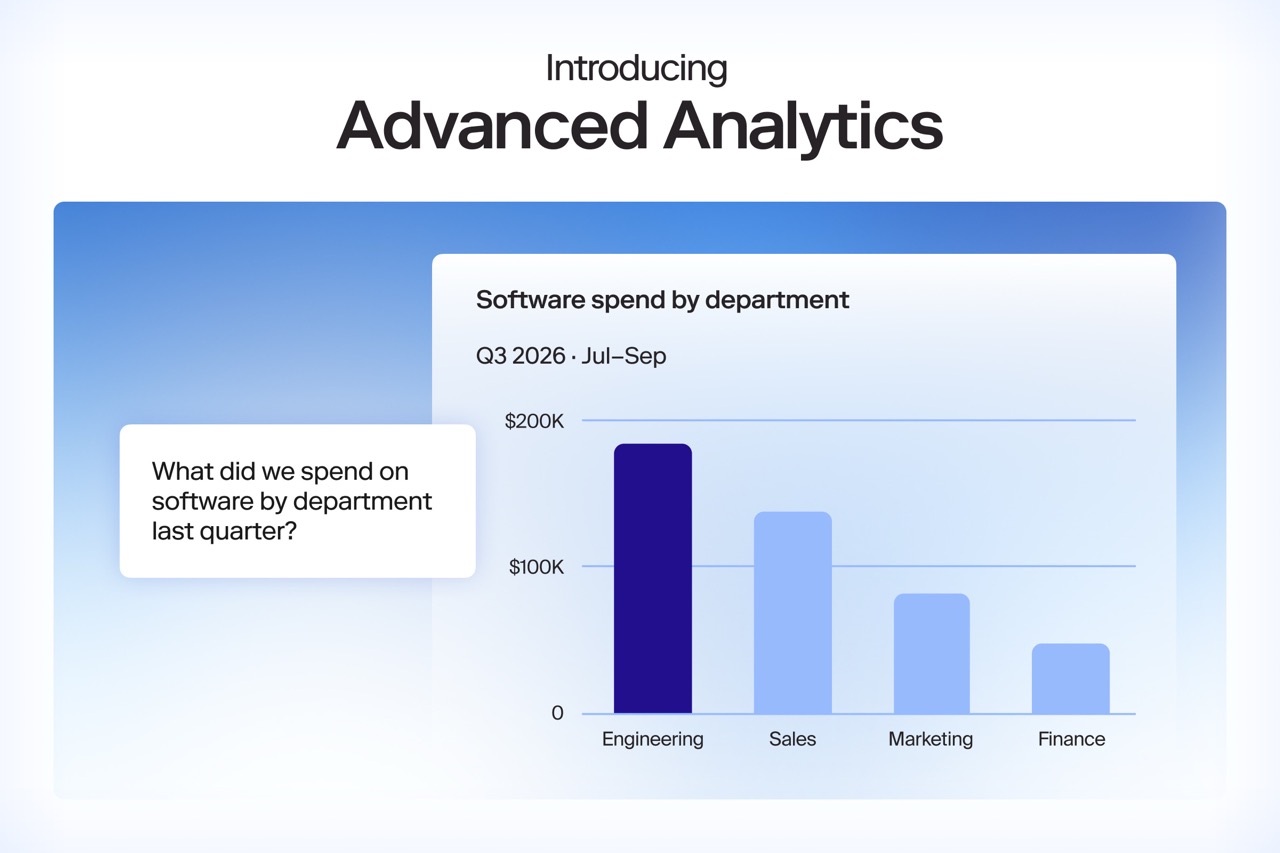
Orchestration unifies data from across the tech stack. Teams get real-time visibility into every dollar requested, committed, or spent.
AI-powered spend intelligence finds inefficiencies on its own. It detects duplicate vendor requests across departments, flags price variances against benchmarks, and surfaces consolidation opportunities. Procurement can act on those findings before the next renewal or purchase.
Procurement orchestration examples for enterprise teams
These enterprises run procurement on Zip’s AI procurement orchestration platform.
OpenAI: 1,400 hours saved with one AI agent
OpenAI’s procurement team deployed Zip’s Intake Validation Agent and saved 1,400 hours a year with that agent alone. Duplicate vendor checks used to take 15 to 20 minutes each and now run automatically. The team has since deployed more than 10 additional AI agents.
Canva: 70% faster cycle times
Rudy Batts, Head of Global Spend at Canva, implemented AI procurement orchestration with Zip to unify Canva’s buying process company-wide. Canva cut procurement cycle times by 70% and now runs a consistent purchasing experience across the organization.
Snowflake: $305M in savings
Snowflake consolidated its procurement tech stack on Zip. With Zip, Snowflake has saved $305 million and gained early visibility into $6.7 billion in spend.
Patreon: full adoption with zero training
Crystal Ryu and the Patreon team rolled out Zip and reached full employee adoption with zero training and no sysadmin. Employees started using the consumer-grade intake experience right away.
Cribl: 15% average contract savings
Cribl built AI agents with Zip, including a Price Negotiation Agent that benchmarks pricing against third-party data and pre-drafts negotiation emails. The agent has delivered 15% average savings on contracts. Benchmarking that used to take hours now takes 30 seconds to a minute.
Barings: 90% fewer manual DORA compliance reviews
Barings embedded a Digital Operational Resilience Act (DORA) screening agent into purchase and renewal requests, and manual DORA compliance reviews dropped by 90%. The agent identifies requests that need further attention, routes them to an employee, and preserves an audit trail. Reviewers spend their time on the cases that require judgment.
How to implement procurement orchestration in five steps
Procurement orchestration rolls out in stages, starting with one workflow and expanding from there.
Step 1. Map your current procurement workflows
Audit your existing intake-to-pay process from end to end. Find the manual bottlenecks, the handoffs that cause delays, and the places where data gets trapped in silos. Catalog your current systems (ERP, CLM, GRC, ITSM) and document how they communicate with each other, if they do at all. This baseline is what you’ll measure every later improvement against.
Step 2. Identify integration points and stakeholders
Map which systems need to exchange data. Then list every cross-functional stakeholder in the approval process: procurement, finance, legal, IT, and security. Knowing who needs to be involved, and at what point, is what lets you design parallel workflows in place of sequential ones.
Zip’s 100+ pre-built connectors give teams a starting point for connecting those systems.
Step 3. Start with a single high-impact workflow
Pick one workflow first. Intake automation is the usual starting point, because it gives employees a single front door for all purchase requests and puts spend in view early. Zip’s guide to five AI pilots outlines starting workflows teams can launch quickly.
Step 4. Deploy AI agents to remove manual tasks
Once your intake workflow is live, add purpose-built AI agents to handle the manual work. Start with data validation, such as vendor details, tax information, and duplicate detection. Then expand to contract review, supplier onboarding, and compliance checks. Zip has 50+ AI agents built for procurement tasks.
Step 5. Measure ROI and scale to full orchestration
Track cycle time, cost savings, and compliance rates within the first 90 days. Use those results to build the business case for expanding from one workflow to full AI procurement orchestration across the organization. Our Executive Guide to Procurement Orchestration covers how to scale AI procurement orchestration across an enterprise.
ROI of procurement orchestration
Most organizations still struggle to measure returns from AI. In Zip’s State of AI in Spend 2026 survey, 17% of leaders said they have achieved clear, measurable ROI from AI investments in procurement technology. Among that group, 60% named cost savings and spend reduction as a top source of that ROI.
Zip customers have collectively saved more than $12 billion and processed more than $1.4 trillion in spend. They include T-Mobile, OpenAI, Advanced Micro Devices (AMD), Mars, and Dollar Tree. A Forrester Total Economic Impact™ study commissioned by Zip found a 386% ROI over three years.
Individual customer results follow the same pattern. Snowflake has saved $305 million with Zip. Canva and Dollar Tree each cut procurement cycle times by 70%. Cribl’s Price Negotiation Agent delivers 15% average savings on contracts.
Signs your organization needs procurement orchestration
Managing distributed spend gets harder when purchasing depends on disconnected systems and manual follow-ups. These signs suggest your organization would benefit from procurement orchestration.
- Teams copy purchasing data between platforms by hand, and approvers work from incomplete information. Orchestration connects those systems so every stakeholder works from the same request record.
- Missing supplier documents and unanswered approval requests delay purchases. Embedded AI agents collect information and validate request details, so reviewers can decide sooner.
- Employees buy through unapproved channels because the purchasing process is confusing. In the State of AI in Spend 2026 survey, 36% of leaders said non-procurement functions increased direct purchasing without procurement involvement over the past year. A simpler intake experience brings more of those purchases under review and improves visibility into tail spend.
- Supplier risk reviews happen separately from purchasing, and teams chase risk findings as contracts approach signature. Risk orchestration moves those checks into the purchasing process, so findings inform approvals.
Take control of your procurement process with Zip
Zip connects your people and technology across the intake-to-pay process. Purpose-built AI agents handle data entry and validation, and parallel approval workflows shorten cycle times. The platform integrates with the ERP, CLM, and GRC tools your teams already use.
Zip was named a Visionary in the 2026 Gartner® Magic Quadrant™ for Source-to-Pay Suites. Zip customers have saved more than $12 billion and processed more than $1.4 trillion in spend. The platform is built by product leaders from Apple, Airbnb, and Meta, and it is the AI platform for enterprise procurement, built for humans and agents working together.
Request a demo to see how Zip runs procurement from intake to pay.
Frequently asked questions
What does procurement orchestration do?
Procurement orchestration coordinates purchasing across teams and systems. Employees submit requests in one place, and the platform routes reviews according to company policy. Stakeholders work from shared request data, which keeps purchases moving and makes progress trackable through payment.
How is procurement orchestration different from procure-to-pay?
Procure-to-pay covers the transactional process from requisition to payment. Procurement orchestration coordinates the broader intake-to-pay lifecycle. It connects sourcing and contract reviews with the systems that execute purchases, and it brings cross-functional approvals into one shared process.
How does risk orchestration fit into procurement orchestration?
Risk orchestration applies supplier risk controls inside the purchasing process. Assessment results determine what review each request needs, and monitoring continues as supplier relationships change. Reviewers evaluate risk alongside the request and keep a record of the evidence behind each decision.
Does procurement orchestration work with existing systems?
Yes. Procurement orchestration connects to existing systems through integrations. An ERP can remain the financial system of record while the orchestration platform coordinates requests and approvals across departments. Teams should confirm which data each integration exchanges and how updates sync between systems.



AI procurement orchestration, from intake to pay

Enter your business email to keep reading
