

Zip Superagents, enriched with the best data in procurement
Here’s how AI data partners help Zip Superagents negotiate better deals.

During my time at Canva, every software renewal I signed as Head of IT and Procurement came down to whether or not we were getting the best price possible for our circumstances.
Of course I had last year's invoice, the supplier's quote, and whatever I might have overheard from coworkers and colleagues.
But the supplier I was negotiating with had pricing data from dozens if not hundreds of customers. I often had no outside data points at all, and worked from first principles and intuition like most of the procurement industry today.
Without a solid benchmark, it's the supplier that sets the anchor.
Reps will tell you that the uplift is standard, the discount is the best they can do, and that you're getting a great deal. You can't check any of it (certainly not during a live call), so you negotiate against your existing pricing, which (surprise!) is the one number the supplier already has.
They might even throw in a small concession or two to get things executed on their timeline, but you have no way of knowing whether a company downstairs pays less for the same contract.
What it costs procurement to work without data
Many procurement teams don't check benchmarks at all when they source, so every negotiation starts with the supplier's number.
The cost of that lands on the CFO, one purchase at a time. A mid-size company runs thousands of purchase requests a year across software, cloud, AI, hardware, services, and marketing, and a large enterprise runs tens of thousands. If each one closes a few points above market, the overpayment adds up to a significant number over the course of the fiscal year.
Prices also move together. When one supplier raises its rates and buyers don't push back, the next supplier in the category has cover to do the same.
A buyer without a benchmark can't tell an increase driven by the market from one driven by a sales quota, and with budgets under pressure, that difference is where the savings are.
Why one data provider can't cover all of your spend workflows
Buying a data subscription fixes part of that, and most teams that have one have exactly one.
These subscriptions are expensive, and it turns out most providers are strongest in one area. A provider built on SaaS spend data can tell you a fair price for Datadog seats, but it has little to say about a consulting statement of work or a rate card for contract engineers.
No single provider covers everything a company buys. Software seats, IT hardware, consulting rates, and contingent labor each need different data from different buyers, and the providers that do each one well are specialists.
For some categories like software, where discounts differ significantly from customer to customer, there's also a big benefit to pulling price benchmarks from multiple providers, since each one brings a different set of data to the negotiation.
Asking a procurement team to pick one provider means choosing which categories to leave unchecked.
How Zip Superagents choose the right data partner
Teams that pay for more than one provider run into a different problem. Each provider has its own login, its own reports, its own contract, and its own invoice.
To check a price, a buyer has to know which provider covers the category, open that system, run the report, oftentimes wait for a human to respond, then carry on with the negotiation, swivel-chairing between their purchasing system and benchmark providers.
Most requesters don't know which provider to use, and the people who do save the effort for the largest renewals of the year.
Zip's Superagents take that work off the requester.
When a request comes in, the Superagent reads what's being bought, goes to the partner whose data covers it, and compares the request to the market range and negotiation context.
It can then automatically start the negotiation with the vendor, grounded in your negotiation playbooks and the benchmark data it needs to land the best possible rate for your circumstances.
Someone contracting engineers doesn't even need to know about Brightfield or hold an account with them directly. If the quote is above market, the requester and the procurement team see it before anyone signs, with the data they need to push back.
Most procurement platforms leave teams to buy, manage, and connect these subscriptions on their own. At Zip, the partners are managed and paid through us. On pay as you go, a team pays per request, so it can check a consulting rate with Beroe one day and a SaaS renewal with Tropic another without carrying two subscriptions or managing two vendor relationships. It's all built in, in real time, as you need it.
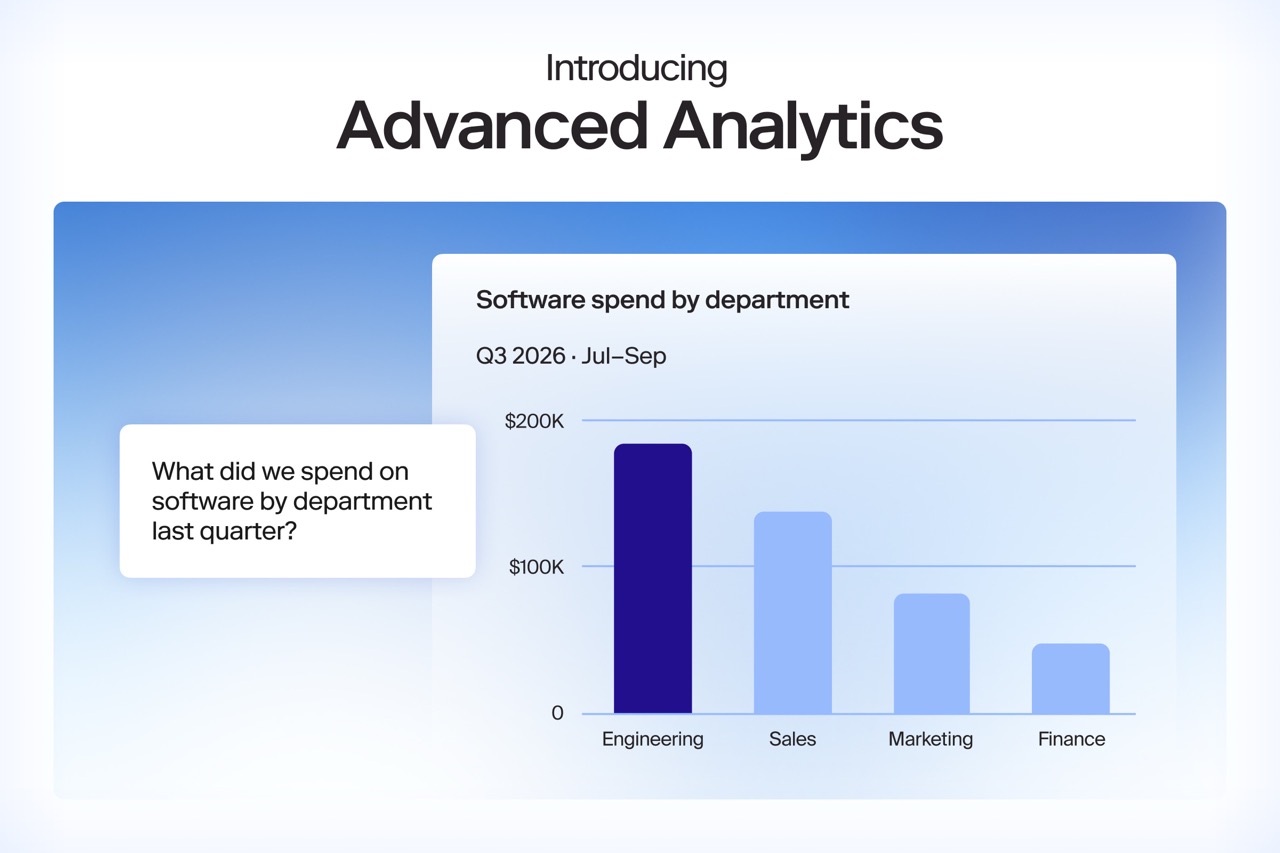
An Unlimited Plan with a provider extends coverage to every purchase request in a category, and lets you use Global Chat and Superagents for conversational benchmarking and supplier discovery at any time.
Today, benchmark data is too expensive and poorly integrated for most teams to use on every purchase. We are democratizing access to data providers and integrating them directly into Zip Superagents, so real-time market context is available on every request.
Why supplier discovery belongs in the same workflow
A fair price only helps if you're negotiating with the right supplier.
Most renewals go back to the incumbent by default, because nobody on the team has time to find out who else could do the work. It's the same problem as a missing benchmark, because the supplier knows you have nowhere else to go.
Teem uses AI to search the supplier base across indirect spend and surface other suppliers worth considering, along with the evidence to act on them. In Zip, a Superagent can bring those options into the request before a team commits to a renewal, so the requester has a real alternative to point to in the negotiation, or a better supplier to move to.
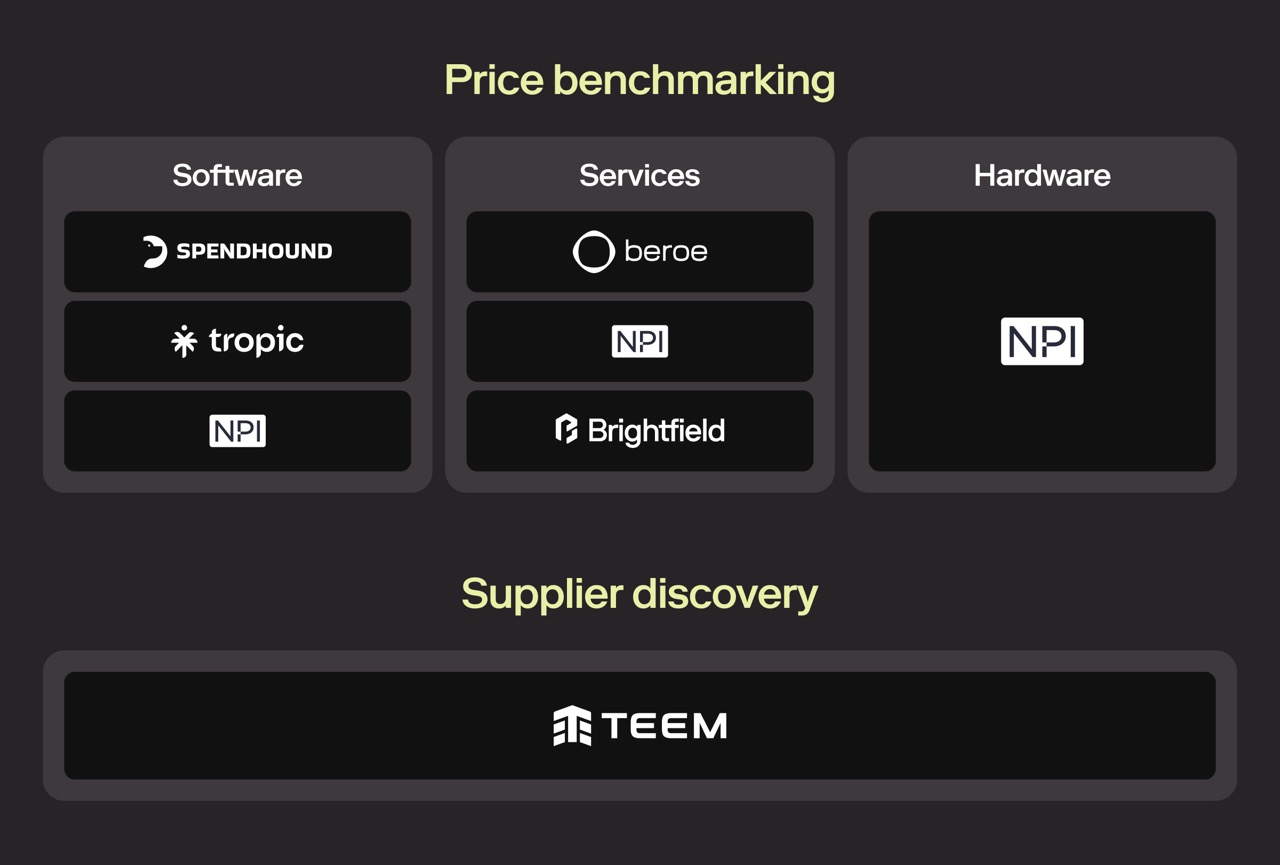
Zip gives you six AI data partners in one network
The network launches with six partners across price benchmarking and supplier discovery, starting with the categories where companies spend the most.
For software, SpendHound and Tropic benchmark SaaS and AI pricing, and both offer expert review when a deal needs a human negotiator. NPI covers large IT agreements that span software, services, and hardware.
For services, Beroe benchmarks professional services rates in areas like legal, ERP, and IT security, while Brightfield benchmarks contingent labor rates for IT and technical contractors. Teem handles supplier discovery across indirect spend.
These six are the start. We're adding partners for legal, risk, and other parts of the spend lifecycle, so Superagents have outside data for more of the decisions procurement makes.
Why AI procurement agents need sourced pricing data
An agent working only from your own spend history knows what you paid last year, the number your supplier knows you know.
To recommend a different price, the agent needs evidence from outside your company, and the person approving the purchase needs to see where that evidence came from.
Every benchmark a Zip Superagent uses names its source and stays on the request record next to the approval. Finance, procurement, and audit can trace why a price was accepted or challenged months after the contract is signed.
We hold every Superagent to the same rule across Zip's AI governance work. It shows its work, and the humans on your team can check it.
If you already pay for a benchmark provider, connect it to Zip so the data shows up on every request instead of the handful you have time to check by hand.
If you don't, run your next software renewal through a Zip Superagent and see what the market says. See it in a demo.










AI procurement orchestration, from intake to pay
Enter your business email to keep reading
