
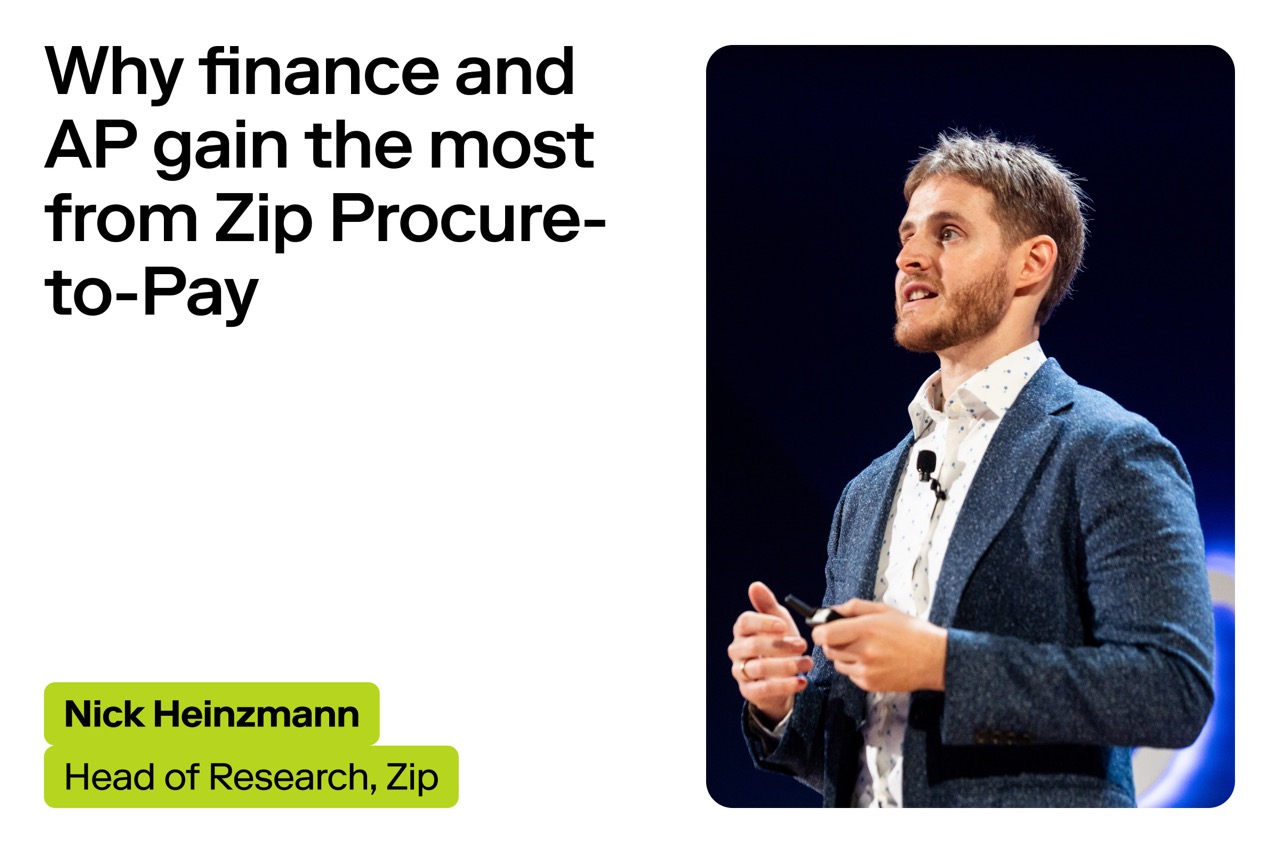
Why finance and AP have the most to gain from Zip Procure-to-Pay
IDC found a 434% three-year ROI, with 43% of the benefit in finance and AP.

Procure-to-Pay reaches further into a company than its name suggests. It's a feeder workflow into accounts payable, but the data accounting needs to finish the process sits farther upstream. As requests come in from from intake, an array of stakeholders feed invoice validation and approvals before finance closes it out.
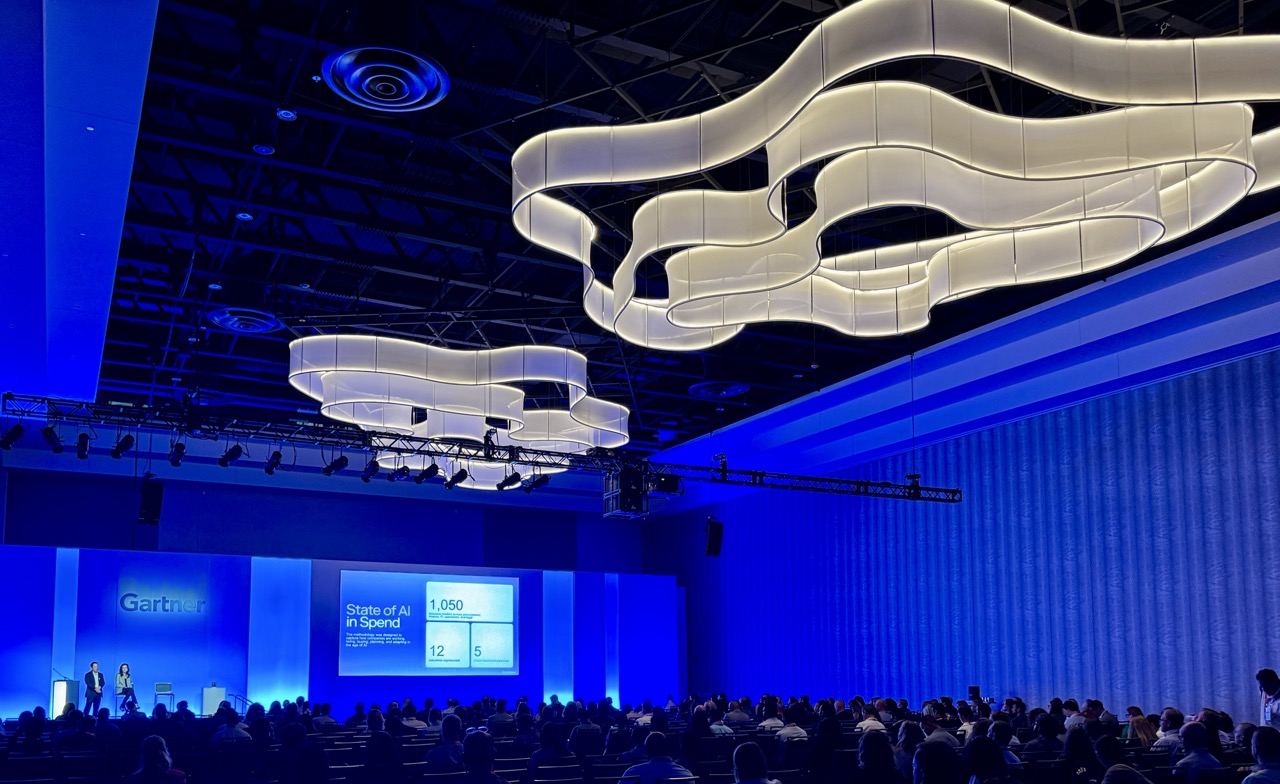
Procure-to-Pay is a throughline that runs to much of our work this year, from Zip’s inclusion on the Gartner Magic Quadrant for Source-to-Pay Suites, to the Forrester Wave on AP invoice automation. Our argument is effectively that orchestration is what consolidates the people, processes, and data that span multiple systems and multiple departments, and consolidating them is what makes it all available for AI to work on.
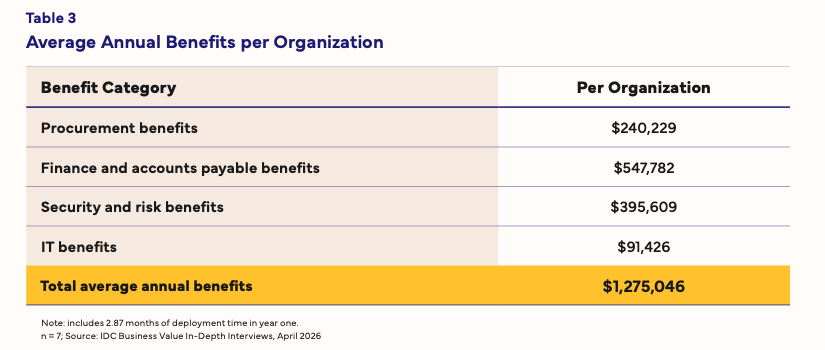
IDC has measured the results of this structure. Of the total annual benefit IDC quantified across seven organizations running procure-to-pay on Zip, 43% landed in finance and AP, more than in any other function.
The Business Value of Zip Procure-to-Pay is built on in-depth interviews with seven organizations across software, financial services, business services, and technology consulting. What the IDC study found across those interviews is more efficient processes in several departments at once, fewer errors and late payments, and higher compliance with the process itself, which feeds cleaner accounting and better judgments downstream.
Here are the key points I took away from the study.
Orchestration beats stitching systems together
Plenty of organizations run AP in a different system than the rest of their procure-to-pay process. Or intake lives one place and contracting lives another. Stitching those together costs real money architecturally, and it costs more than people expect in manpower.
So the way to win here is to place the whole cycle in one coordinated system. The IDC study's figure for Zip’s solution is $1.3 million in average annual benefit per organization, spanning four functions: procurement, finance and AP, security and risk, and IT. The platform touches all four at the same time, which is why the value shows up in all four.
But pay attention to what’s happening around the edges.
A financial services participant told IDC that teams nobody thinks of as procurement teams, their book ordering and subscriptions groups, migrated entirely into Zip and took ownership of their own workflows. In their words, it got other user groups thinking the way procurement thinks. Everyone ends up working from the same process because the process is finally in one place.
Compliance and security work best when they sit upstream
Every organization in this study already had compliance controls. The controls existed. What changed is where in the cycle they run.
Moving OFAC checks, security reviews, and policy validation to the point of request makes them structurally sound throughout audit season and beyond. It also means the data capture that audit and accounting care about happens while someone is still filling out a form, rather than getting reconstructed months later.
IDC measured audit team productivity rising 31%. Late payments fell from 42% of invoices to 3%, which comes from centralizing visibility into payment obligations and automating the matching rather than reconciling by hand. There's a fraud dimension here as well. One technology consulting participant described getting hit constantly before Zip, with check washing and payments being cashed.
The pattern in all of it is that audit and compliance work used to be retroactive. Moving the controls upstream lets the process produce the evidence, which cuts the volume of audit work that has to happen at all.
Visibility changes what finance can plan for
Of course Zip also led to faster invoice processing; IDC measured 58% quicker total payment cycles from invoice to payment, and 55% of invoices handled through AI scanning with no manual entry or field mapping.
What I found interesting is what I shared at the top, which is that finance and AP turned out to be the largest single category of value the IDC study quantified, at 43% of the total annual benefit.
Better spend visibility changes how finance teams plan, and the study includes a nice example. One participant renegotiated payment terms from net 5 to net 45, because they could finally see what was actually being negotiated across their vendor relationships.
Another put it in terms of the conversations they get to have now. They can plan ahead and talk to their controller and accounting team in advance, instead of those teams absorbing a surprise and doing the work retroactively.
That's the underlying condition this whole architecture addresses. Accounting sits downstream of decisions it has no way to see while they're being made, so it gets unexpected bills and nasty month-end surprises. Some of that is people not following the process. Most of it is that nothing connects the upstream decision to the downstream record.
The case we're making is that procure-to-pay needs to run on an orchestration platform for that connection to exist at all. The IDC study is the clearest outside evidence I've seen that the approach is differentiated and that the value is real.
Read The Business Value of Zip Procure-to-Pay by IDC →
Source: IDC Business Value White Paper, sponsored by Zip, The Business Value of Zip Procure-to-Pay, doc #US54527026-BVWP, August 2026.




%20Large.jpeg)

.webp)




.avif)

AI procurement orchestration, from intake to pay
Enter your business email to keep reading
